Srila Prabhupada - "All the expansions, the viṣṇu-tattvas, the jīva-tattvas (jiva-souls) and the śakti-tattvas (the Personalities of Godhead, the living entities and the different potential energies [both spiritual and material]) are different offshoots from the same one Supreme Lord.
The jīva-tattvas (marginal living entities or jiva-souls) are "separated" expansions (yet also eternal) from the viṣṇu-tattvas, and although there are potential differences between them, they are all meant for the transcendental sense gratification of the Supreme Lord.
Some of the jīva-souls however, wanted to lord it over material nature in imitation of the lordship of the Personality of Godhead. Regarding when and why such propensities overcame the pure living entities, it can only be explained that the jīva-tattvas have infinitesimal independence and that due to misuse of this independence some of the living entities have become implicated in the conditions of cosmic creation and are therefore called nitya baddhas, or eternally conditioned souls." (SB, Canto 3 Ch 5 Text 51, Purport)
The five different categories of the variety of living entities-
1 - Krsna - The original Supreme Personality of Godhead and cause of ALL causes who has a 64 qualities (100% of His tributes)
2 - Visnu-tattva - The many expansions God like Narayana, Ramacandra, Balarama, Maha-Visnu, Garbhodakashayi Visnu etc, who have 60 of Krsna's 64 qualities or 93.75% of Krsna's qualities.
3 - Visnu -"sakti"-tattva - God (Krsna) as His direct internal living energy expansions headed by Srimati Radharani, and includes Her unlimited associates (gopis) expansions who all have 60 of Krsna's 64 qualities, which is 93.75% of Krsna's qualities. Srimati Radharani Herself is no different than Krsna and can even exhibit all of Kṛṣṇa's 64 qualities on special occasion having 100% of His tributes. There is no difference between Krsna and Srimati Radharani.
4 - Siva-tattva - Lord Siva is in a league of his own, in-between Viṣṇu-tattva and jiva-tattva and has 55 of Krsna's 64 qualities, which is 85.938% of Krsna's qualities.
5 - Marginal living entities (jiva-tattva or jiva-souls) are independent "separated" living entities. The individual jiva-souls have 50 of Krsna's 64 qualities, which is 78.125% of Krsna’s attributes.
Only the Visnu-tattva and Visnu-"sakti"-tattva are full direct expansions of Krsna. This means they are Kṛṣṇa playing unlimited different rolls in the spiritual world under Viṣṇu-tattva and Visnu-"sakti"-tattva, or are managing the material creation as the three Viṣṇus-
1 - Kāraṇodakaśāyī Visnu (Maha-Visnu)
2 - Garbhodakaśāyī Visnu (Hiraņyagarbha)
3 - Ksirodakaśāyī Visnu (Paramātmā, Supersoul)
Kāraṇodakaśāyī Visnu (Maha-Visnu) further expands as the form of Garbhodakaśāyī Visnu (Hiraņyagarbha) who enters each of the millions of large universes known as a Brahmandas that all originate from the pores of Maha-Visnu's Body and creates a secondary universe inside the Brahmanda.
Each Garbhodakashayi Visnu lays down deep inside each of these massive Brahmanda outer surrounding universes and a Lord Brahma appears from His naval and builds the various planetary systems within the secondary material universe inside the Brahmanda.
Maha-Visnu (Kāraṇodakaśāyī Visnu) again further expands as Kṣīrodakaśāyī Visnu (Paramatma) who is the Supersoul situated in the heart of all material bodily vessels next to the marginal living beings (jiva-souls) in all the millions of material universes.
Kāraņodaksayi Visnu or Maha-Visnu, is Sankarsana (an expansion of Balarama) of the Catur-vyuha, the quadruple expansions of Krsna who predominate over the Vaikuṇṭha planets as His Visnu-tattva (also God) expansions.
Balarama is the first expansion of Lord Krsna the Supreme Personality of Godhead and cause of all causes. From Balarāma, all Visnu-tattva expansions manifest.
Over all, Krsna is the origin of all Visnu/Narayana forms of God and Balarama is the first expansion to come from Krsna.
The individual jiva-souls (marginal living entities) in Krsna's Kingdoms of the Vaikuntha plants with Visnu/Narayana, and Krsna's central planet of Goloka-Vrindavana, can all voluntarily service Kṛṣṇa the way they choose, ALL service in the spiritual world is voluntary, and Krsna NEVER interferes with that.
Srila Prabhupada - "In the spiritual world all service is voluntary, some devotee wants to serve Krsna as flower; they become flower there. If I want to be a flower I shall lie down at the lotus feet of Krsna, he becomes flower, voluntarily, and he can change his, from flower to human body. That is spiritual life. There is no restriction. If some devotee wants to serve Krsna as cow, he serves Krsna as cow, as calf, as flower, as plant, as water, as ground, field, or as father, as mother, as friend, as beloved, anything. It is inconceivable, yet a fact." (SB, Canto 6 Ch 1 Text 1-4, Melbourne, May 20, 1975)
This also means the jiva-souls always having their own unique personality separate and independent from Krsna's Personality. And yes, this allows them to even reject Krsna if they choose, but also allows them to choose for themselves and make some amazing exclusive offerings to Krsna due to their independent nature of self expression, only possible because of free will.
What is Visnu-"sakti"-tattva?
Srila Prabhupada - "Tattva is manifested in different ways:
1 - Viṣṇu-tattva,
2 - Viṣṇu-śakti-tattva
3 - jīva-tattva, like that". (Lecture SB, Canto 6 Ch 2 Text 7, Vrndavana, Sept 10, 1975)
Śakti-tattva is the energy of God and has many categories of living entities in its meaning.
However, when putting Viṣṇu in front of sakti like "Visnu-sakti-tattva" it then refers to the direct expansions of Krsna whereas sakti can also refer to the jiva-souls. The word "sakti" refers to all the different categories of living entities, including the individual jiva-souls who are jiva-tattva however, the jiva-souls are not direct expansions of Krsna (God).
On the other hand when "sakti" is refers to Radharani or Visnu and Narayana forms of the living entities, then word Visnu is put in front of sakti to making it clear that in these cases, sakti means direct expansions of Krsna, hence, "Visnu-sakti-tattva."
Srila Prabhupada puts the word Visnu in front of sakti just so one knows who is the Supreme Lord as "sakti", and who is not as "sakti."Visnu-"sakti"-tattva expansions of Krsna are eternally engaged in their service as the Lord because such Visnu expansions have only the desire to please Krsna or Visnu BECAUSE they ARE the Lord and can NEVER be covered by Maya.
They ARE Krsna playing a different ìNb role within His own pastimes, unlike the individual jiva-souls who have their own free will and personality separate from Krsna's Personality.
In other words the jiva-souls, also known as the sakti energy of Krsna, are NOT God (Krsna) like other expansions of sakti are. Krsna has many different energies called sakti. The jiva-souls are one, matter is one, the consort expansions of the Lord are one.
Srila Prabhupada - "Sakti or shakti means the "energy of Krsna." (SB, Canto 4 Ch 6 text 43, Purport)
The marginal living entities (jiva-souls) are parts and parcels of Krsna and are also the sakti energy of Krsna, along with other categories of living entities known as Viṣṇu-tattva and Visnu sakti-tattva expansions of Krsna. However However, the jiva-tattva souls are NOT on the same level as Krsna's direct expansions known as Viṣṇu-tattva and Visnu-sakti-tattva.
Visnu-sakti-tattva is represented by Srimati Radharani, Krsna's internal potency.
"Sakti" as Visnu-sakti-tattva individuals refers to Krsna's direct expansions within the internal potency. Sakti or the of energy of Krsna has many different categories. When "sakti-tattva" refers to Krsna's direct Visnu-tattva expansions, then it is called a Visnu-"sakti"-tattva expansions.
On the other hand, all jiva-souls (marginal living entities) CAN leave Vaikuntha or Goloka Vrindavana anytime they choose as explained above because they have the quality of "free will" as part of their marginal constitution. If they had no choice to choose between serving Krsna and doing their own thing in the material creation, then without that choice of using one's free will, then how can there be genuine love?
Srila Prabhupada - "If you have no free will, then you are a stone. The stone has no free will. You want to be stone? Then you MUST have free will! But don't misuse your free will. But don't try to become stone either. That is not life." (Aug 5, 1976, New Mayapur France)
The spiritual worlds of Vaikuntha and Goloka Vrindavana are personal Kingdoms based on voluntary loving exchanges and cooperation between Krsna and His devotees, it is NEVER a "one-way" street of forceful demands.
Ultimately, we are all Krsna's servant and are very dear to Him however, that does not mean we have to give up our "free will", "individuality" and unique personality to be Krsna's friend and servant.
Srila Prabhupada - "Love is reciprocal, voluntary, good exchange of feeling. Then there is love. Not by force, no, Krsna does not want to become a lover like that, ‘You love me otherwise I shall kill you!" (Washington DC July 8, 1976)
Srila Prabhupada – "So everyone can know that independence means one can use it properly, or one can misuse it. That is independence. If you make it one way only, that is not independence, that is force." (Los Angeles, June 23, 1975)
Srila Prabhupada - "Free will" means that you can act wrongly. That is "free will". Unless there is chance of doing wrong or right, there is no question of "free will". Where is "free will" then? If I act only one sided, that means I have no "free will". Because we act sometimes wrongly, that means free will."
Hayagriva - "A man may know better but still act wrongly."
Srila Prabhupada - "Yes, but that is free will, he misuses his, just like a thief, he knows that his stealing, it is bad, but still he does it. That is free will. He cannot check his greediness, so in spite of his knowing that he is doing wrong thing—he will be punished, he knows; he has seen another thief, he was punished, he was put into prison— everything he knows, but still he steals. Why? Misuse of free will. Unless there is misuse of free will, there is no question of free will." (Excerpt from: Philosophy Discussions with Srila Prabhupada on Rene Descartes)
The individual jiva-souls are unique independent living entities in the Spiritual Worlds, who have their own personality and a sense of independent self that is separate from Krsna's Personality, yet simultaneously dependent on Krsna as His parts and parcels.
As already explained, "free will" in its full potential, ONLY fully exists in Vaikuntha and Goloka Vrindavana, and is greatly restricted and almost does not exist in the material creation (only minutely in the human species).
Krsna does NOT force the living entity (jiva-soul) to love Him.
The word "tatastha-sakti" refers to the marginal living entities (jiva-souls) in their FALLEN conditioned state in both the material creation and when dormant in the impersonal Brahmajyoti.
The "marginal living entities" ARE a collective of eternal jiva-souls without any beginning point who are spread throughout the entire Spiritual Sky (both Spiritual Worlds and material worlds)
Those jiva-souls who have made the choice to enter the temporary decomposing material creation, can later, due to the frustration of material life, enter an inactive dormant state within the Brahmajyoti (the impersonal aspect of Brahman).
The marginal living entities (jiva-souls) are known in both the material creation and the impersonal Brahmajyoti as tatastha sakti but NOT in Vaikuntha and Goloka-Vrindavana Prabhupada explains here.
Srila Prabhupada - "So this material world is the taṭastha (conditioned) characteristics, and the Spiritual Worlds are the Personal (Vaikuntha) characteristics." (New York City, Dec 28, 1966)
Revatīnandana - "Srila Prabhupāda you very clearly explained to me once in a letter that if the jiva-soul then goes into the brahmajyoti, he is considered still fallen. Still fallen. Does that means the whole brahmajyoti is composed of fallen souls? You see my question? If I go there, I'm a jīva-soul, and I go to the brahmajyoti I'm still fallen."
Srila Prabhupāda - "Yes."
Revatīnandana - "That means all jīva-souls there are also fallen souls?"
Srila Prabhupāda - "Yes, existence in the impersonal brahman is also within the category of non-Krsna consciousness. Those who are in the brahman effulgence are also in the fallen condition, so there is no question of falling down from a fallen condition." (Letter to: Revatinandana, Los Angeles 13 June, 1970 and conversation Aug 17, 1971, London)
Srila Prabhupada - "When fall takes place, it means falling down from the non-fallen condition. The non-fallen condition is Krsna consciousness." (Letter to: Revatinandana, Los Angeles 13 June, 1970)
In the jiva-souls original state, they have the same bodily features like Krsna, sat-cit-ananda-vigraha (eternity, knowledge, bliss and FORM, they did NOT originate from any impersonal or dormant state in the Brahmajyoti. The full potential and original (eternal) feature of all marginal living entities is a "two-arm" form like Krsna's Form.
Devotee – "Is the original body of the spirit soul a human form?"
Srila Prabhupada – "Yes, human form. God is also human form. "Man is made after the shape of God." I think there is in the Bible. Is it not? So God is also like human form. Here you see Krsna, two hands, two legs."
Hari-sauri – "How do we understand, then, that there are peacocks and flowers and trees in the spiritual world? Are these not eternal forms?"
Srila Prabhupada – "[describing material form first]: Yes. They are more covered. Just like if you cover your body with blanket, the hands and legs are invisible. But you are not the blanket. So the trees and plants, they are more covered. They are not in full manifestation. The human form is the full manifestation of the soul."
Hari-sauri - "They are covered in the spiritual world?"
Srila Prabhupada - "Not in the spiritual world, there that is voluntary, some devotee wants to serve Krsna as flower; they become flower there. If I want to be a flower I shall lie down at the lotus feet of Krsna, he becomes flower, voluntarily, and he can change his, from flower to human body. That is spiritual life. There is no restriction. If some devotee wants to serve Krsna as cow, he serves Krsna as cow, as calf, as flower, as plant, as water, as ground, field, or as father, as mother, as friend, as beloved, anything. It is inconceivable, yet a fact." (SB, Canto 6 Ch 1 Text 1-4, Melbourne, May 20, 1975)
The marginal living entities (jiva-souls) are a collective of an unlimited number of individual jiva-souls who are eternal, meaning they have ALWAYS existed but, as said above, they are only called tatastha-sakti while "conditioned" in the material creation and impersonal Brahmajyoti.
As said above, the jiva-souls were NEVER created or created from any origin (starting point) because there is NO origin of the jiva-souls, they have ALWAYS existed without a beginning or end.
Krsna states twice in the Srimad Bhagavatam that we left Him. Canto 4 Chapter 28 Text 53 and Canto 4 Chapter 28 Text 55.
Krsna directly asks the jiva-soul,
"Do you remember Me!!"
How can you remember what you never knew?
Krsna directly says 'hitvā māṁ', You rejected me. He says it again at 4.28.55 sa tvaṁ vihāya māṁ bandho.
"You are the one who rejected Me, O friend!" sa tvaṁ vihāya māṁ bandho. Yes, and we should now be determined to return back home back to Godhead, to again be with Krsna.”
Srila Prabhupāda fully explains here from Srimad Bhagavatam that our ORIGINAL home, from where we ALL jiva-souls have originated from, is Goloka Vrindavana, the perpetual Kingdom of God and original home.
Srila Prabhupada - "In Bhagavad-gītā the Lord says that whenever one sees an extraordinary power, he should conclude that a specific partial representation of the Supreme Personality of Godhead is present. There are innumerable such personalities, but not all of them are direct viṣṇu-tattva plenary expansions of the Lord. Many living entities are classified among the śakti-tattvas. Such incarnations, empowered for specific purposes, are known as śaktyāveśa-avatāras. King Pṛthu was such a śaktyāveśa-avatāra of the Lord. Similarly, Arci, King Pṛthu's wife, was a śaktyāveśa-avatāra of the goddess of fortune." (SB, Canto 4 Ch 15 Text 6, Purport)
Śakti-tattva is the energy of God and has many categories of living entities in its meaning. However, when putting Viṣṇu in front of sakti like "Visnu-sakti-tattva" it then refers to the direct expansions of Krsna whereas sakti can also refer to the jiva-souls.
Srila Prabhupada - "In the Brahma-saṁhitā, the important demigods—Lord Śiva, Lord Brahmā and even the incarnations and expansions of Lord Kṛṣṇa like Mahā-Viṣṇu, Garbhodakaśāyī Viṣṇu and all the other viṣṇu-tattvas, as well as the śakti-tattvas like Durgādevī—are all worshiped by the process of worshiping Govinda with the words govindam ādi-puruṣaṁ tam ahaṁ bhajāmi.
A Vaiṣṇava worships the demigods in relation to Govinda, not independently.
Vaiṣṇavas are not so foolish that they consider the demigods independent of the Supreme Personality of Godhead. This is confirmed in Caitanya-caritāmṛta. Ekale īśvara kṛṣṇa, āra saba bhṛtya: (CC Adi 5.142) the supreme master is Kṛṣṇa, and all others are His servants." (SB, Canto 5 Ch 4 Text 17, Purport)
Srila Prabhupada - "The words bṛhate namas te have been explained by Śrīla Viśvanātha Cakravartī Ṭhākura: bṛhate śrī-kṛṣṇāya. The Supreme Personality of Godhead is Kṛṣṇa. There are many tattvas, such as viṣṇu-tattva, jīva-tattva and śakti-tattva, but above everything is the viṣṇu-tattva, which is all-pervading. This all-pervading feature of the Supreme Personality of Godhead is explained in Bhagavad-gītā (10.42), wherein the Lord says:
athavā bahunaitena
kiṁ jñātena tavārjuna
viṣṭabhyāham idaṁ kṛtsnam
ekāṁśena sthito jagat
"But what need is there, Arjuna, for all this detailed knowledge? With a single fragment of Myself I pervade and support this entire universe." (SB, Canto 8 Ch 3 Text 17, Purport)
Srila Prabhupada - "Everything is situated as part of the Supreme Lord's potency. In regard to Lord Kṛṣṇa's appearance in the womb of Devakī, Brahmā played a part also because on the bank of the milk ocean he requested the Supreme Personality of Godhead to appear. A part was also played by Baladeva, the first expansion of Godhead. Similarly, Yogamāyā, who appeared as the daughter of mother Yaśodā, also played a part.
Thus jīva-tattva, viṣṇu-tattva and śakti-tattva are all integrated with the Supreme Personality of Godhead, and when Kṛṣṇa appears, He appears with all His integrated parts. As explained in previous verses, Yogamāyā was requested to attract Saṅkarṣaṇa, Baladeva, from the womb of Devakī to the womb of Rohiṇī, and this was a very heavy task for her. Yogamāyā naturally could not see how it was possible for her to attract Saṅkarṣaṇa." (SB, Canto 10 Ch 2 Text 9, Purport)
Srila Prabhupada - "Śrī Caitanya Mahāprabhu, who is the supreme controller, the one Personality of Godhead, has ecstatically become a devotee, yet His body is transcendental and not materially tinged. There are different tattvas, or truths, including īśa-tattva, jīva-tattva and śakti-tattva. Īśa-tattva refers to the Supreme Personality of Godhead Viṣṇu, who is the supreme living force. In the Kaṭha Upaniṣad it is said, nityo nityānāṁ cetanaś cetanānām: the Supreme Personality of Godhead is the supreme eternal and the supreme living force.The living entities are also eternal and are also living forces, but they are very minute in quantity, whereas the Supreme Lord is the supreme living force and the supreme eternal. The supreme eternal never accepts a body of a temporary material nature, whereas the living entities, who are part and parcel of the supreme eternal, are prone to do so." (CC Adi 7.10, Translation and Purport)
Srila Prabhupada - "In his Anubhāṣya, Śrī Bhaktisiddhānta Sarasvatī Ṭhākura, describing the truth about the Pañca-tattva, explains that we should understand that Lord Śrī Caitanya Mahāprabhu is the supreme predominator and that Nityānanda Prabhu and Advaita Prabhu are His subordinates but are also predominators.
Lord Śrī Caitanya Mahāprabhu is the Supreme Lord, and Nityānanda Prabhu and Advaita Prabhu are manifestations of the Suppreme Lord. All of Them are viṣṇu-tattva, the Supreme, and are therefore worshipable by the living entities.
Although the other two tattvas within the category of Pañca-tattva—namely, śakti-tattva and jīva-tattva, represented by Gadādhara and Śrīvāsa—are worshipers of the Supreme Lord, they are in the same category because they eternally engage in the transcendental loving service of the Lord." (CC Adi 7.15, Purport)
Srila Prabhupada - "The devotees headed by Gadādhara Paṇḍita are to be considered incarnations of the internal potency of the Lord. They are confidential devotees engaged in the service of the Lord. In connection with verses 16 and 17, Śrī Bhaktisiddhānta Sarasvatī Ṭhākura explains in his Anubhāṣya:
“There are specific symptoms by which the internal devotees and the unalloyed or pure devotees are to be known. All unalloyed devotees are śakti-tattvas, or potencies of the Lord.
Some of them are situated in conjugal love and others in filial affection, fraternity and servitude. Certainly all of them are devotees, but by making a comparative study it is found that the devotees or potencies who are engaged in conjugal love are better situated than the others. Thus devotees who are in a relationship with the Supreme Personality of Godhead in conjugal love are considered to be the most confidential devotees of Lord Śrī Caitanya Mahāprabhu." (CC Adi 7.17, Translation and Purport)
Srila Prabhupada - "Śrīla Bhaktisiddhānta Sarasvatī Ṭhākura comments in his Anubhāṣya that among the five tattvas, two are energies (śakti-tattva) and the three others are energetic (śaktimān tattva). Unalloyed and internal devotees are both engaged in the favorable culture of Kṛṣṇa consciousness untinged by philosophical speculation or fruitive activities. They are all understood to be pure devotees, and those among them who simply engage in conjugal love are called mādhurya-bhaktas, or internal devotees. The loving services in parental love, fraternity and servitude are included in conjugal love of God. In conclusion, therefore, every confidential devotee is a pure devotee of the Lord." (CC Adi 7.18-19, Purport)
Srila Prabhupada - "In Bengal there is perpetual competition between the devotees of goddess Kālī and the devotees of Lord Kṛṣṇa. Generally Bengalis, especially those who are meat-eaters and drunkards, are very much attached to worshiping the goddesses Durgā, Kālī, Śītalā and Caṇḍī. Such devotees, who are known as śāktas, or worshipers of the śakti-tattva, are always envious of Vaiṣṇavas. Since Śrīvāsa Ṭhākura was a well-known and respected Vaiṣṇava in Navadvīpa, Gopāla Cāpāla wanted to reduce his prestige by bringing him down to the platform of the śāktas." (CC Adi 17.38, Purport)
Srila Prabhupada - "In different Vedic scriptures, there are prescribed rules and regulative principles for worshiping different types of forms. When one is purified by these rules and regulations, he worships You, the Supreme Personality of Godhead. Although manifested in many forms, You are one." This verse is quoted from Śrīmad Bhāgavatam (10.40.7). In the Vedas it is stated that the one becomes many (eko bahu syām). The Supreme Personality of Godhead expands Himself in various forms—viṣṇu-tattva, jīva-tattva and śakti-tattva." (CC Madhya 20.173, Translation and Purport)
Srila Prabhupada - "Gradually Kṛṣṇa and Balarāma reached the city of Dvārakā, which was surrounded by the sea. Following this, Śrī Balarāma married Revatī, daughter of King Raivata, ruler of Ānarta Province. This is explained in the Ninth Canto of Śrīmad Bhāgavatam. After the marriage of Baladeva, Kṛṣṇa married Rukmiṇī. Rukmiṇī was the daughter of King Bhīṣmaka, ruler of the province known as Vidarbha. Just as Kṛṣṇa is the Supreme Personality of Godhead, Vāsudeva, Rukmiṇī is the supreme goddess of fortune, Mahā-Lakṣmī. According to the authority of the Caitanya-caritāmṛta, the expansion of Kṛṣṇa and that of Śrīmatī Rādhārāṇī are simultaneous-
Kṛṣṇa expands Himself into various viṣṇu-tattva forms, and Śrīmatī Rādhārāṇī expands Herself into various śakti-tattva forms, by Her internal potency, as multiforms of the goddess of fortune." (Krsna Book 52)
Viṣṇu-tattva is puruṣa-tattva, and we are śakti-tattva, śakti, energy, marginal energy of Kṛṣṇa. So energy is prakṛti. The prakṛti is not puruṣa.
Srila Prabhupada - "Prakṛti means enjoyed. Enjoyer and... Predominator and the predominated. So jīva-bhūta, we jīvas, we are all prakṛti. Puruṣa is only Kṛṣṇa. All living entities... Viṣṇu-tattva is puruṣa-tattva, and we are śakti-tattva, śakti, energy, marginal energy of Kṛṣṇa. So, energy is prakṛti. The prakṛti is not puruṣa. So Māyāvāda philosophy is wrong. They pose them as so 'ham. So 'ham "I am the same." How you can be same? In the śāstra it is said that "You living entity, you are prakṛti."
How you can become same, you puruṣa. This is mistake. How prakṛti, how a woman can become man? Artificially one can become. Here also so-called woman, they are also puruṣa. They are thinking puruṣa. Puruṣa means enjoyer. Here woman is also thinking to enjoy, and the so-called man is also thinking to enjoy. Everyone. Nobody wants to serve. Everyone wants to be served. Puruṣa attitude." (Lecture BG, Ch 1 Text 13-14, London, July 14, 1973)
Srila Prabhupada - "Of course, Kṛṣṇa is viṣṇu-tattva. Kṛṣṇa is not in the category of jīva-tattva. There are jīva-tattvas, there are śakti-tattvas, there are viṣṇu-tattvas. People do not know it. Therefore in the next line it is said, paraṁ bhāvam ajānantaḥ. They do not know what is viṣṇu-tattva, what is jīva-tattva, what is śakti-tattva, how things are working. Paraṁ bhāvam ajānantaḥ (BG 9.11). Mama bhūta-maheśvaram: "I am the Supreme Person." (Lecture BG, Ch 9 Text 11, Calcutta, June 30, 1973)
Srila Prabhupada - "So there are expansions, svāṁśa, personal expansion, and separated expansion. The personal expansions are called viṣṇu-tattva. Baladeva... Just like Lord Caitanya Mahāprabhu, His personal expansion is Nityānanda Prabhu and Advaita Prabhu. And Śrīvāsādi they are separated expansion. Although they are associates, but Śrīvāsa, jīva-tattva; and Nityānanda Prabhu and Advaita Prabhu, viṣṇu-tattva. And Gadādhara is śakti-tattva. So in this way, God is person and His personal expansions are innumerable, unlimited. Viṣṇu-tattva. They are worshipable. And other tattva, śakti-tattva and jīva-tattva, they are meant for service. But all together taken, that is one. That is Absolute Truth." (Lecture SB, Canto 1.3.27, Los Angeles, October 2, 1972)
Śakti-tattva is the energy of God covering many categories as explained above, in this way śakti-tattva, or the energy of God, is also called Vishnu-sakti-tattva refering to direct expansions of Krsna.
Srila Prabhupada - "So God is one, but there are different kinds of demigods. That is also a fact. They are accepted as different parts and parcels of God, as we are also. The demigods are also living entities. They are not viṣṇu-tattva. There are viṣṇu-tattva, jīva-tattva and śakti-tattva. Viṣṇu-tattva is the Supreme Absolute Truth, jīva-tattva is part and parcel, and śakti-tattva is the energy of God. So the demigods... You can become a demigod. You can become. If you follow the process how to become, then you become one day the demigod in the sun planet. It is not difficult. You can become one day even Lord Brahmā." (Lecture SB,Canto 1 Ch 5 Text 15, New Vrindaban, WV. June 19, 1969)
Viṣṇu-tattva, jīva-tattva, śakti-tattva. There are different tattvas.
Srila Prabhupada - "Anything about Nārāyaṇa, that is not of this material world. That is of the spiritual world. Therefore, Kṛṣṇa question and Kṛṣṇa answer, they are not material things.
Therefore, if we always engage ourself in Kṛṣṇa question and Kṛṣṇa answer... śravaṇaṁ kīrtanaṁ viṣṇoḥ (SB 7.5.23). Therefore it is called Viṣṇu. Not that any other śravaṇaṁ kīrtanam. Only Viṣṇu. Viṣṇu means viṣṇu-tattva.
Rāmādi-mūrtiṣu kalā-niyamena tiṣṭhan. Viṣṇu-tattva means rāmādi-mūrti. Rāma, Nṛsiṁha, Varāha, Kṛṣṇa... There are so many. They are described. They are viṣṇu-tattva. Viṣṇu-tattva, jīva-tattva, śakti-tattva.
There are different tattvas. So śravaṇaṁ kīrtanam. If you engage yourself in śravaṇaṁ kīrtanam, that should be for Viṣṇu, not for any other, anyone else. Śravaṇaṁ kīrtanaṁ viṣṇoḥ smaraṇam. Smaraṇam, meditation. That is also Viṣṇu." (Lecture SB, Canto 2 Text 1.3, Delhi, Nov 6, 1973)
Srila Prabhupada - "If one thinks that the holy name of Hari is as good as the name of other demigods, then it is nāmāparadha. That is not śuddha-nāma. So people are being misguided in that way. But the śāstra does not say that.
The śāstra says, harer nāma, harer nāma (CC Adi 17.21), the holy name of Hari, Kṛṣṇa, Viṣṇu, Viṣṇu-tattva. Hari means Viṣṇu-tattva. There are...
So śāstra says that harer nāma, Viṣṇu-tattva. Viṣṇu... Of course, Lord Viṣṇu has several thousands of names according to His different activities: Viṣṇu, Nārāyaṇa, Hari, Govinda, Mādhava, many names." (Lecture SB, Canto 6 Ch 2 Text 7, Vrndavana, Sept 10, 1975)
Srila Prabhupada - "Tattva is manifested in different ways: Viṣṇu-tattva, Viṣṇu-śakti-tattva, jīva-tattva, like that." (Lecture SB Canto 6 Ch 2 Text 7, Vrndavana, Sept 10, 1975)
Srila Prabhupada - "We do not know who is the actual architect behind all this nice material creation. That is Mahā-Viṣṇu, and His incarnation is Advaita Prabhu.
Caitanya Mahāprabhu is directly Kṛṣṇa, or Kṛṣṇa's incarnation. Nityānanda Prabhu is directly incarnation of Baladeva, and similarly, Śrī Advaita Prabhu is incarnation of Mahā-Viṣṇu.
So all of Them are on the equal footing. Śrī-kṛṣṇa-caitanya prabhu-nityānanda, śrī-advaita. They are on the same equal level. And then śakti-tattva, Śrī-Gadādhara and Śrīvāsādi gaura bhakta-vṛnda.
Gadādhara is the internal energy, and Śrīvāsādi gaura bhakta-vṛnda, they are marginal energy.
So Īśvara-tattva and śakti-tattva. So within this group, there is no this material energy because in the spiritual world there is no action of material energy, only spiritual energy.
In the material world there is action of material energy. In the spiritual world there is no material energy. Therefore, in this Pañca-tattva, there is no mention of material energy because in the spiritual world there is no material energy." (Lecture CC Adi-lila 1.12, Mayapur, April 5, 1975)
Srila Prabhupada - "Kṛṣṇas tu bhagavān svayam: (SB 1.3.28) "All of them are Bhagavān, but the original Bhagavān, real Bhagavān, is Kṛṣṇa." Kṛṣṇas tu bhagavān svayam. So everyone is under Kṛṣṇa.
Therefore Caitanya caritāmṛta says, ekale īśvara kṛṣṇa āra saba bhṛtya (CC Adi 5.142). Āra saba bhṛtya, servant. Even īśvara-tattva, viṣṇu-tattva, they are also working as servant of Kṛṣṇa.
Advaita Ācāryas, just like He's Īśvara, but He's serving as servant of Caitanya Mahāprabhu. Therefore ekale īśvara... Na kṛṣṇāt caitanyāt para-tattvam param iha. They're... Above Kṛṣṇa, above Caitanya Mahāprabhu, there is no more para-tattva. Param iha. It is the Supreme.
So in this way we have to study īśvara-tattva, then śakti-tattva, jīva-tattva. That is knowledge; that is education.
Not whimsically suggesting something and talking foolishly and... Athāpi te deva padāmbuja dvaya prasāda-leśānugṛhīta eva hi jānāti tattvam (SB 10.14.29). If you want to know the truth, then you have to follow these principles, how to know īśvara-tattva.
And how to know? Tad-vijñānārthaṁ sa gurum eva abhigacchet (MU 1.2.12). Then you have to go, approach the bona fide guru. He will let you know." (Lecture CC Adi-lila 1.12, Mayapur, April 5, 1975)
Advaita Ācārya is īśvara-tattva. He's not śakti-tattva. He's īśvara-tattva. And we are all śakti-tattva; therefore there is difference.
Srila Prabhupada - "As Caitanya-caritāmṛta Kar is explaining, we have to follow this principle. Then if you are really inquisitive to learn the Absolute Truth, they will explain, as here it is explained that here Advaita Ācārya is īśvara, He's incarnation of Mahā-Viṣṇu.
Sometimes Advaita Ācārya is called Sadāśiva avatāra. The Sadāśiva is also expansion of Mahā-Viṣṇu.
So either way you say, incarnation of Sadāśiva or Mahā-Viṣṇu, it doesn't matter. But Advaita Ācārya is īśvara-tattva. He's not śakti-tattva. He's īśvara-tattva. And we are all śakti-tattva; therefore there is difference. Śakti-śaktimān.
Although there is no difference abhinna, but still, śakti-tattva is superior, er, śaktimān tattva is superior than śakti-tattva. So in this way try to understand Śrī Caitanya Mahāprabhu, Nityānanda Prabhu, Advaita Prabhu, and Gadādhara and Śrīvāsādi-gaura-bhakta-vṛnda. And... But they are so kind because they have come to deliver the fallen souls." (Lecture CC Adi-lila 1.12, Mayapur, April 5, 1975)
Jīva-tattva, śakti-tattva, prakāśa-tattva, and avatāra-tattva, and He Himself. This Pañca-tattva.
Srila Prabhupada - "So Nityānanda Prabhu is the immediate expansion of Śrī Caitanya Mahāprabhu.
Śrī Caitanya Mahāprabhu appeared here at Māyāpur, this very place where you are now sitting, with all these five features-
Nityānanda Prabhu,
Śrī Advaita Prabhu,
Gadādhara Prabhu,
Śrīnivāsa Prabhu.
So He Himself, Kṛṣṇa, and Nityānanda Prabhu is immediate expansion of His personal self;
Advaita Prabhu is incarnation of Kṛṣṇa or Viṣṇu, Mahāviṣṇu, three,
Gadādhara Prabhu is the expansion of spiritual energy,
Śrīnivāsa Prabhu is the expansion of His marginal potency, marginal energy, jīva-tattya. Jīva-tattva, śakti-tattva, prakāśa-tattva, and avatāra-tattva, and He Himself. This Pañca-tattva.
This Pañca-tattva will be explained in this chapter.
That is the proposal of the author. Guru-tattva kahiyāchi ebe pāñcera vicāra. Consideration of the five. So although the Absolute Truth is one, He expands in His various features. That has been divided in Caitanya Mahāprabhu's practical exposition of tattva-vicāra, in six: five personal, and the guru is also representative". (Lecture CC Adi-lila 7.3, Mayapur, March 3, 1974)
Srila Prabhupada - "Bhagavān means His paraphernalia. Just like when we speak, "Now the king is coming," it is not that king is alone coming. The king is coming with his minister, with his commander, with his secretaries, with his so many officers.
So when we speak of Bhagavān, don't think He is alone only. No. Pañca..., that Pañca-tattva. When Bhagavān incarnates, He comes with all the associates, His śakti-tattva, avatāra-tattva, prakāśa-tattva.
Many paraphernalia He comes. So here Caitanya Mahāprabhu, avatīrṇa. Here it is said, pañca-tattva avatīrṇa caitanyera saṅge (CC Adi 7.4). Caitanyera-saṅge... Caitanya Mahāprabhu is Kṛṣṇa Himself. So He must have His associates. Associates. That is Bhagavān." (BG, Ch 7 Text 4, Purport Mayapur, March 4, 1974)
The Absolute Truth is one, but there are categories:
"This is śakti-tattva; this is prakāśa-tattva; this is incarnation tattva; this is marginal potency; this is external potency."
Srila Prabhupada - "So here it is said, eka-vastu. So far the substance is concerned, that is eka-vastu. Just like in logical categories the substance is there, and there are many categories. Take for example that the Absolute Truth is one, but there are categories:
"This is śakti-tattva; this is prakāśa-tattva; this is incarnation tattva; this is marginal potency; this is external potency." Parāsya śaktir vividhaiva śrūyate." (Cc. Madhya 13.65, purport).
Srila Prabhupada - "There are many multipotencies. Because the original is Absolute Truth, in one sense everyone is in the same absolute platform. In the Śrīmad-Bhāgavatam there is a verse, idaṁ hi viśvaṁ bhagavān ivetaraḥ:
"This viśva, the whole cosmic manifestation, is Bhagavān, the Supreme Personality of Godhead."
Just like Kṛṣṇa manifested His universal form. So every part and parcel is Bhagavān, but still, it is different. This is the philosophy of Caitanya Mahāprabhu's acintya-bhedābheda: simultaneously one and different, inconceivable. We cannot conceive at the present moment how one thing can be t0phe same, at the same time different; therefore it is called acintya, inconceivable. But bhedābheda... Just like we are—everything—you study. It is acintya-bhedābheda, one and different." (Lecture CC Adi-lila 7.5, Mayapur, March 7, 1974)
The jīva-tattva, śakti-tattva, viṣṇu-tattva, these are all tattvas. So Pañca-tattva. Śrī Kṛṣṇa Caitanya is the supreme tattva, Kṛṣṇa.
Srila Prabhupada - "We are living in air, but if I think that air and the water is the same, I jump over the ocean, that is not very good idea. But actually, air is also Kṛṣṇa, water is also Kṛṣṇa, earth is also Kṛṣṇa, fire is also Kṛṣṇa, because they are all Kṛṣṇa's energy.
So in this way, if we try to understand that Pañca-tattva, śrī-kṛṣṇa-caitanya prabhu-nityānanda, śrī-advaita gadādhara śrīvāsādi-gaura-bhakta-vṛnda... This is Pañca-tattva: Śrī Kṛṣṇa Caitanya, Śrī Nityānanda, Śrī Advaita, Śrī Gadādhara, and Śrīvāsādi. Śrīvāsādi means jīva-tattva.
The jīva-tattva, śakti-tattva, viṣṇu-tattva, these are all tattvas. So Pañca-tattva. Śrī Kṛṣṇa Caitanya is the supreme tattva, Kṛṣṇa. Śrī-kṛṣṇa-caitanya, rādhā-kṛṣṇa nahe anya. We are worshiping Rādhā-Kṛṣṇa. So Śrī Kṛṣṇa Caitanya is Rādhā-Kṛṣṇa combined." (Lecture CC Adi-lila 7.5, Mayapur, March 7, 1974)
Srila Prabhupada - "Now, Caitanya Mahāprabhu says that "Jīva-tattva, the living entities, they are never the energetic; they are energy." Energetic and energy. So how it is so? The evidence is from Bhāgavata, Viṣṇu Purāṇa and Bhagavad-gītā. Because one has to give evidence. How do you say that jīva-tattva, the living entities, they are not the Supreme?
Caitanya Mahāprabhu sa..., they are not su... Not to say, I mean to say, speak of Supreme, they are not even of the same category. Because there are different categories.
Viṣṇu-tattva, jīva-tattva and śakti-tattva—there are so many categories.
So He says that "Jīva, the living entities, they are in the categories of energy.
They are not energetic." Energetic and energy, you should try to understand. Just like the fire, fire and its heat. Heat is the energy, and the fire is the energetic.
Similarly, the Supreme Lord, He is the energetic, Supreme Person, and we, the living entities, we are energy". (Lecture on CC Adi- 7.113-17, San Francisco, February 22, 1967)
The viṣṇu-tattvas are known as puruṣa-tattva, whereas the jīva-tattva is known as śakti-tattva.
Srila Prabhupada - "The viṣṇu-tattva is called svāṁśa. There is no difference between one viṣṇu-tattva to another. Just like (indistinct) Rāmacandra, He is viṣṇu-tattva. Nārāyaṇa, viṣṇu-tattva. Balarāma, viṣṇu-tattva.
So there is no difference in power. They are called svāṁśa, svāṁśa-vistṛra. And there are other vistṛra. That is called vibhinnāṁśa vistṛra, separated part and parcel.
We are, we the jīvas, we are also expansion of Kṛṣṇa or Viṣṇu. But we are a small, separated part and parcel, whereas viṣṇu-tattva expansion, They are full in power.
The viṣṇu-tattvas are known as puruṣa-tattva, whereas the jīva-tattva is known as śakti-tattva.
Jīva-tattva, as the Māyāvādī philosophers, they think that jīva-tattva can be God or jīva can become God. That is a false theory. It has no value according to Vedic scripture." (Speech at Gaudiya Math Center, Visakhapatnam, Feb 19, 1972)
Srila Prabhupada - "Kṛṣṇa says that there are many manifestations of the Supreme Lord Viṣṇu. Just like candles, there are many candles, each candle has got the illuminating power. Similarly, eko bahu syām.
Viṣṇu expands Himself in many, many millions of forms. Those forms are called svāṁśa and vibhinnāṁśa. Svāṁśa, personal expansions, and separated expansions.
The separated expansions are we, we living entities. As it is stated in the Bhagavad gītā, mamaivāṁso jīva bhūta (BG 15.7).
So we are also expansions of Viṣṇu, or Kṛṣṇa, but we are separated. Means we are not personal expansions. The personal expansions is called Viṣṇu-tattva, and the separated expansion is called jīva-tattva. Viṣṇu is śaktimān, and we are śakti. That is also stated in the Bhagavad-gītā:
apareyam itas tu viddhi
me prakṛti parām
jīva-bhutāṁ mahā-baho
yayedaṁ dhāryate jagat
(BG 7.5)
So we are śakti-tattva. We are NOT śaktimān-tattva (Viṣṇu is śaktimān)
It is not corroborated. One who thinks that "I am God," śaktimān-tattva, that is false. We are śakti-tattva. Śaktimān means the powerful, one who possesses the power. And śakti means the power or energy". (Lecture, Bombay, March 19, 1972)
This is our position: jīva is śakti-tattva and bhagavān is śaktimān-tattva. But śakti, śaktimān abheda, there is no difference.
Srila Prabhupada - "If you feel heat, it does not mean that you're touching the fire or that you are being burned. So simultaneously one and different. This philosophy of Caitanya Mahāprabhu, acintya-bhedābheda-tattva-
simultaneously, inconceivable one and different.
That is Caitanya Mahāprabhu's philosophy, Vaiṣṇava philosophy. We are neither different nor one, simultaneously, and therefore it is called inconceivable, acintya.
In our material conception we cannot think that one thing may be simultaneously one with another and different from another. So this is our position: jīva is śakti-tattva and bhagavān is śaktimān-tattva.
But śakti, śaktimān abheda, there is no difference. There are many other examples. Just like the sun and sunlight. Sunlight is not different from the sun, and still the sunlight is not the sun." (Lecture, Bombay, March 19, 1972)
The more you discuss the thesis—not thesis; the factual presentation of Viṣṇu-tattva, māyā, and jīva-tattva, śakti-tattva—then it will be clear what is Kṛṣṇa.
Srila Prabhupada - "So, Viṣṇu-tattva, worshipable, or Kṛṣṇa-tattva, worshipable. And to pin our staunch faith in Viṣṇu, we should discuss about Viṣṇu-tattva and who is not Viṣṇu-tattva. That is called siddhānta. Siddhānta boliyā citte nā kara alasa-
"Don't be lazy to discuss about siddhānta." Ihā haite kṛṣṇe lāge sudṛḍha mānasa-
"The more you discuss the thesis—not thesis; the factual presentation of Viṣṇu-tattva, māyā, and jīva-tattva, śakti-tattva—then it will be clear what is Kṛṣṇa."
Kṛṣṇa is the origin of everything. Ahaṁ sarvasya prabhavo mattaḥ sarvaṁ pravartate (BG 10.8). We should try to understand this fact, that Kṛṣṇa is the origin of everything, and if we take to Kṛṣṇaⁿ consciousness... Kṛṣṇe bhakti kaile sarva-karma kṛta haya.
If you become Kṛṣṇa conscious, then your all other duties automatically... The same example, as we have given: If you pour water on the root of the tree, then all other duties are automatically done." (Morning Lecture, Allahabad, Jan 15, 1977)
So devatās, they are śakti-tattva, śakti category, the same category as you are.
Srila Prabhupada - "So Rāma... Bhagavān has different forms: rāmādi-mūrtiṣu kalā-niyamena tiṣṭhan (Bs. 5.39). Bhagavān (Hindi)."
Guest - "That's good. So that explains..."
Srila Prabhupāda - "Viṣṇu-tattva. That is called Viṣṇu-tattva".
Guest - "In that expansion can't we take Durgā and Siva, even for..."
Srila Prabhupāda - "Yes. That is śakti-tattva. We have to take expansion according to the tattva. Substance and categories; in which category. The substance is Viṣṇu, and all other tattvas are categories. So devatās, they are śakti-tattva, śakti category, the same category as you are. The same example.
Just like here a government officer, he is also Indian gentleman, you are also Indian gentleman, but he has got his power on account of his high qualities. Similarly you can become also Durgā. You can become Indra, Candra, Sūrya. So qualitatively the ant, you are a learned brāhmaṇa, they are all the same category." (Room Conversation, Nov 11, 1971, New Delhi)
Devī is śakti-tattva. Jīva is also śakti-tattva. In one sense jīva-tattva is higher than this material śakti-tattva.
Srila Prabhupāda - "A paṇḍita knows that they are on the same jīva-tattva categories. Viṣṇu-tattva, jīva-tattva, śakti-tattva, there are many tattvas. Brahman-tattva, paramātmā-tattva, and Bhagavat-tattva, they are the substance, and all other tattvas, they are jīva-tattva, śakti-tattva, like that. So Bhagavān is not jīva-tattva, but others, they are jīva-tattva. Demigods, they are jīva-tattva. Brahma is also jīva-tattva. Devī is śakti-tattva. Jīva is also śakti-tattva. In one sense jīva-tattva is higher than this material śakti-tattva." (Room Conversation, Nov 11, 1971, New Delhi)
The same śakti. Cit-śakti. Bhagavān ke pleasure potency. Śakti, śakti-tattva.
So Śaktimān. Bhagavān is Śaktimān, and that śakti is Rādhārāṇī or Sītā or Lakṣmī. Durgā is also śakti, another feature of Rādhārāṇī.
Srila Prabhupāda - "Yes. Rāma is another... There is no difference between Rāma and Kṛṣṇa. If you like...
Guest - "The form comes different in the..."
Srila Prabhupada - "Yes, but they are the same. Rāmādi mūrti."
Guest - "For purpose of practice I am asking, when you chant Rāma, should you have the form of Rāma before you?"
Srila Prabhupāda - "That depends on your affection. Bhagavān has got many forms. If you want, if you love Rāma, that's all right. If you love Kṛṣṇa, that is all right. If you love Nārāyaṇa, that is also all right. But Bhagavān mūrti, rāmādi-mūrtiṣu."
Guest - "Along with Rādhe? (Hindi) (laughter)"
Srila Prabhupāda - "That is incongruency. Rāma with Sītā."
Guest - "Along with..."
Srila Prabhupāda - "Huh?"
Guest - "Kṛṣṇa along with Rādhikā."
Srila Prabhupāda - "Kṛṣṇa, Kṛṣṇa with Rādhārāṇī."
Guest - "Then what is Rādhā category?"
Srila Prabhupāda - "The same śakti. Cit-śakti. Bhagavān ke pleasure potency. Śakti, śakti-tattva. So Śaktimān. Bhagavān is Śaktimān, and that śakti is Rādhārāṇī or Sītā or Lakṣmī. Durgā is also śakti, another feature of Rādhārāṇī."
Guest - "Śakti in original is Rādhā?"
Srila Prabhupāda - "Yes, Parāsya śaktih..., parāsya śaktir vividhaiva śrūyate." (Cc. Madhya 13.65, purport)
Srila Prabhupada - "Originally cit-śakti. That cit-śakti is expanding. Just like we are..., rāmādi mūrtiṣu kalā-niyamena tiṣṭhan (Bs. 5.39). Kalā means part and parcel.
So we are also part and parcel, but we are very small part and parcel. But rāmādi mūrti, they are bigger part and parcel. Just like if you throw one brick on the floor, so there will be so many small particles, big particles, this particle, that.
They are all part and parcel of the brick, but one part very small atomic part, and one big part, this part, this part, then this part, then this part. So all, Kṛṣṇa is the origin, and everyone is part and parcel. Some of them are bigger and some of them are smaller. So Viṣṇu-tattva is almost like Kṛṣṇa." (Room Conversation, Nov 11, 1971, New Delhi)
Some of them are Viṣṇu-tattva,
some of them are Jīva-tattva, some of them are Śakti-tattva and some of them para-tattva.
Guest - "Śakti in original is Rādhā?"
Srila Prabhupāda - "Yes, Parāsya śaktih..., parāsya śaktir vividhaiva śrūyate (Cc. Madhya 13.65, purport). Originally cit-śakti. That cit-śakti is expanding. Just like we are..., rāmādi mūrtiṣu kalā-niyamena tiṣṭhan (Bs. 5.39). Kalā means part and parcel. So we are also part and parcel, but we are very small part and parcel.
But rāmādi mūrti, they are bigger part and parcel. Just like if you throw one brick on the floor, so there will be so many small particles, big particles. They are all part and parcel of the brick, but one part very small atomic part, and one big part, this part, this part, then this part, then this part. So all, Kṛṣṇa is the origin, and everyone is part and parcel. Some of them are bigger and some of them are smaller. So Viṣṇu-tattva is almost like Kṛṣṇa."
Guest - "Like Kṛṣṇa."
Srila Prabhupāda - "Others, they are very small. So according to the size, or according to the power..."
Guest - "Power."
Srila Prabhupāda - "The part and parcel exercises his position. Some of them are Viṣṇu-tattva, some of them are Jīva-tattva, some of them are Śakti-tattva and some of them para-tattva. Like that."
Guest - "Para-tattva?"
Srila Prabhupada - "Para tattva."
Guest - "Means?"
Srila Prabhupāda - "Para-tattva is Bhagavān. Para-tattva means Kṛṣṇa, Rāma, Nārāyaṇa, Viṣṇu. These are para tattva-
Bhagavān avatāra,
rāmā,
nṛsiṁha,
varāha,
kūrma,
vāmana,
daśāvatāra,
all avatāra.
Or śakti-tattva, material energy, aparā-tattva, matter. Similarly cit-tattva, spiritual world. The living entities, although they are in the material world, they belong to the spiritual world. Therefore Kṛṣṇa says, apareyam. This material energy is inferior. Itas viddhi me prakṛtiṁ parām. Beyond this there is another, superior energy, jīva-bhūta, that is jīva." (Room Conversation, Nov 11, 1971, New Delhi)
And only śakti-tattva, Gadādhara and Śrīvāsa. And other three, they are śaktimān-tattva.
Srila Prabhupāda - "Śakti also can be taken as tattva."
Indian man (2) - "As tattva, yes. And these tattvas, Pañca-tattvas, have been described as śaktis. These Pañca-tattvas also have been described as śakti."
Srila Prabhupāda - "But Caitanya Mahaprabhu as śaktimān, and others..."
Indian man (2) - "As śakti."
Srila Prabhupāda - "Not all śakti; two Pañca-tattva. Īśāvatāra, tat-prakāśa(?) avatāra, the are not śakti. They are all the śaktimān."
Indian man (2) - "Yes, yes."
Srila Prabhupāda - "And onòly śakti-tattva, Gadādhara and Śrīvāsa. And other three, they are śaktimān-tattva."
Indian man (2) - "They are śaktimān-tattva."
Srila Prabhupāda - "Pañca-tattvātmakaṁ kṛṣṇaṁ bhakta...(Room Conversation with Gaurachand Gosvami At the Radha-Damodara Temple." (March 11, 1972, Vrndavana)
Srila Prabhupāda - "So He is existing with all the incarnations, rāmādi-mūrtiṣu. So Rāma is not less than Kṛṣṇa, but He is incarnation. This is the conclusion."
Indian man - "Because I was trying to refer to Govindāṣṭakam, Where ipt says, (sings) śrī kṛṣṇa rādhā āra gokuleśa gopāla govardhana-nātha viṣṇu, jīveti amṛtamedhadevo govindaṁ dāmodaram ada vetti(?) He's saying, śrī kṛṣṇa rādhā āra gokuleśa gopāla govardhana-nātha viṣṇu. That is what I was trying to see that is really... I know that say Kṛṣṇa's expansion is Mahā-Viṣṇu, but still, why do they say govardhana-nātha viṣṇu? That I was trying to understand. Please don't misunderstand me."
Srila Prabhupāda - "No, no, Govardhana... Every one is viṣṇu-tattva. Viṣṇu-tattva, jīva-tattva, śakti-tattva, like that. So all of them on the Viṣṇu category. That's all.
Viṣṇu-tayā vibhāti. Viṣṇu-tayā vibhāti. Dīpārcir eva hi daśāntaram abhyupetya dīpāyate viṣṇu-tayā vibhāti (Bs. 5.46).
These things are there. So Godhead is viṣṇu-tattva. So sometimes Viṣṇu, sometimes Nārāyaṇa, sometimes Govinda, sometimes Kṛṣṇa, like that." (Room Conversation, July 17, 1976, New York City)
The sakti tattva, or jiva tattva is always enjoyed. Our position is always predominated. If we remain in that position and properly use our small independence, then we remain happily eternally.
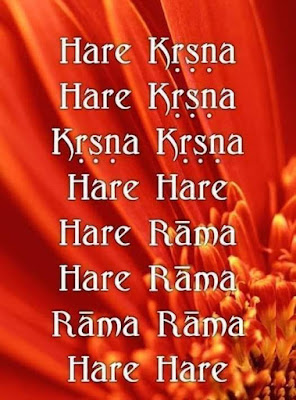
Srila Prabhupada - "Regarding your question, "What does Rama mean in Hare Rama? Is this Balarama or Lord Ramacandra? You can take it both ways, because there is no difference between Ramacandra and Balarama. Generally it means Krsna, because Rama means enjoyer. So either Ramacandra, Balarama or Krsna are all Visnu Tattvas and are always enjoying. The sakti tattva, or jiva tattva is always enjoyed. Our position is always predominated. If we remain in that position and properly use our small independence, then we remain happily eternally. But artificially, if we want to be independent and imitate the Supreme Enjoyer, then it is delusion.
Material life means trying to imitate the Enjoyer, and spiritual life means to remain in one's eternal position as enjoyed. This Hare Krsna Mantra is addressed to the energy of the Lord and the Lord Himself to keep the chanter in his eternal position of being enjoyed.
The prayer is "My Lord, Oh the Spiritual Energy of the Lord, kindly keep me engaged in Your service." Regarding your other question, Krsna in His four-handed Visnu Form is within our hearts, but He is not different from two-handed Krsna." (Arundhati, Hamburg 9 Sep, 1969)