Friday, July 16, 2021

The marginal living entities (jiva-souls) are in four different categories.

1 - The jiva-souls associate with Krsna in Goloka-Vrindavana as a friend and four other different ways explained below.

2 - Serving Visnu/Narayana who is the Supreme God on the Vaikuntha planets that surround Krsna's central Adode of Goloka-Vrindavana.

3 - Being embodied (covered) in a temporary material bodily vessel in the impermanent material creation.

4 - And attempting to cease one's existence as a person by attempting to merge (extinguish one's individuality) into the dormant "inactive" impersonal Brahmajyoti.

Entering the "inactive" Impersonal Brahmajyoti or Brahman to a Vaiṣṇava is considered spiritual suicide (even though the condition is also temporary)

However, such merging is only temporary and not permanent, even though the jiva-souls can stay there hovering inactively for a very long time, many millions of life time of Lord Brahma who lives for 311 trillion and 400 billion human years.

The dormant (inactive) jiva-souls in the Brahman effulgence eventually fall out of that inactive condition (impersonal Brahmajyoti) because the nature of the jiva-soul is to be ALWAYS active and have a reciprocal relationship with Kṛṣṇa.

In fact, the jiva-soul can stay in the impersonal Brahmajyoti or Brahman for so long that when they again awaken from their impersonal inactive slumber, they wrongly believe the impersonal Brahmajyoti is their origin when inactive they all come from Vaikuntha.

Srila Prabhupada - "The next question, about the living entities falling down in this material world are NOT from the impersonal brahman. Existence in the impersonal brahman is also within the category of non-Krsna consciousness." (Los Angeles 13 June, 1970)

Srila Prabhupada - "Those who are in the brahman effulgence they are also in the fallen condition, so there is no question of falling down from a fallen condition. When fall takes place, it means falling down from the non-fallen condition. The non-fallen condition is Krsna consciousness. So long as one can maintain pure Krsna consciousness, he does not fall down. As soon as he becomes out of Krsna consciousness, immediately he has fallen down." (Letter to Revatinandana, Los Angeles 13 June, 1970)

The jiva-souls forget they fell to that dormant condition in the impersonal brahman in the first place a long, long, long time ago that can equal quadrillions of life times of Lord Brahma who lives for 311 trillion and 40 billion human years.

The jiva-souls are NOT generated (originate) from some imaginary place or plane in outer space, OR from the impersonal Brahmajyoti because they have no origin. 

Being “generated” from the marginal plane does NOT mean the jiva-souls “originated” from some "so called place" in the Brahmajyoti or Spiritual Sky, including tatastha-sakt.

Being "marginal" means having the choice to be influenced by the spiritual energy and the material energy-

1 - The jiva-souls nature position and full potential in the spiritual world is always being connected to the spiritual energy.

2 - Or by the material energy which is an unnatural or incompatible "conditioned state" the jiva-soul is in.

Srila Prabhupada - "As living spiritual souls we are all originally Krsna conscious entities, but due to our association with matter from time immemorial, our consciousness has now become polluted by the material atmosphere." (Hare Krsna "Happening record album" New York City, Dec 1966)

As said above, the real meaning of "marginal" means the jiva-souls can choose to be influenced by either the spiritual energy, or the material energy based on their free will.

There is no origin to the individual jiva-souls, they are eternally parts and parcel of Krsna and just as old as Krsna.

Srila Prabhupada - "Your question about one's relationship with Lord Krsna on Krsnaloka, does he ever fall down? The jiva-souls are endowed with minute independence as part of their nature and this minute independence may be utilized rightly or wrongly at anytime, so there is always a chance of falling down by misuse of one’s independence." (Letter to Jagadisa dasa, 4/25/1970)

Only the marginal living entities (jiva-souls) can express themselves in a seperate way from Krsna, including disageeing with Him if they choose, which means they have free will.

This is because all Visnu-tattva personalities ARE Krsna just playing unlimited roles in other ways in His own pastimes.

Mother Yasoda is not a jiva-soul, she is a direct expansion of Krsna (Visnu-tattva) 

In other words, just like Krsna is also Balarāma, and Radharani is also Krsna but in a different mood, Mother Yasoda is also an expansion of Krsna.

Srila Prabhupada - "Nanda and mother Yasoda are the eternal father & mother of Krsna. This means that whenever Krsna descends, Nanda and Yasoda, as well as Vasudeva and Devaki, also descend as the Lord's father and mother. Their personalities are expansions of Krsna's personal body." (SB, Canto 10.8.48)

There are no new jiva-souls being created by Krsna, Maha-Visnu, or the impersonal brahmajyoti. 

The jiva-souls (marginal living entities) were NEVER created, they are beginningless and endless and have ALWAYS existed over infinity.

But sadly, many foolish gurus, sannyasis, scholars and teachers of Vedic knowledge cannot understand these facts.  

Srila Prabhupada - "There is no new soul, new and old are due to this material body, but the soul is NEVER born and NEVER dies, so if there is no birth, so how there can be new soul?" (Letter to Jagadisa dasa 7/9/1970)

Srila Prabhupada - "We (the jiva-souls) are marginal energy (jiva-souls). Marginal means sometimes internal, sometimes external. When we are under the internal energy, that is our normal life, and when we are under the external energy, that is our abnormal life. Therefore, we are called marginal energy (jiva-souls); we can be either this way or that way. But being qualitatively one with the purusa, our tendency is to remain in the internal energy. Being in the external energy is our artificial attempt." (Letter to Mass 25 April, 1969)

Maha-Visnu does NOT create any jiva-souls as some big, big sannyasis, gurus and Vedic scholars foolishly believe and teach their naïve disciples. 

The jiva-souls go to Maha-Visnu after leaving Vaikuntha or Goloka-Vrindavana, to acquire a material bodily vessel so they can enter the material creation in an attempt to experience their desires.

As said above, no jiva-souls originates from Maha-Visnu, nor does He create any jiva-souls as impersonalist, mayavadis and mundane religionists also wrongly teach.

It is important to understand there is no such thing as new jiva-souls being created because they have ALWAYS existed and were NEVER created as Bhagavad Gita explains.

Bhagavad Gita As It Is Chapter 2, Verse 12

"Never was there a time when I did not exist, nor you, nor all these kings; nor in the future shall any of us cease to be." (BG 2.12)

Bhagavad Gita As It Is "1983 correct edition," Chapter 2 text 20-

"For the soul there is neither birth nor death at any time. He has not come into being, does not come into being, and will not come into being. He is unborn, eternal, ever-existing and primeval. He is not slain when the body is slain." (BG, Ch 2 text 20 "correct" 1983 edition)

Srila Prabhupada – "There are no new souls, new and old are due to this material body, but the jiva-soul is never born and never dies, so if there is no birth, how can there be new souls?" (Letter to Jagadisa dasa, 7/9/1970)

Only matter is temporary (like the material bodily vessel the jiva-soul is presently in), while the jiva-souls in the material bodily vessels are eternal and can NEVER cease to exist.

This means when the material vessels the jiva-soul are in breaks down due to disease, decay, old age or accidents, and ceases to function, the jiva-souls can no longer remain in that broken material body, and are forced to take another material bodily vessel in the womb of a new mother.

The jiva-souls also never lose their spiritual identity mentioned above when the outer covering or material body breaks down and decays (dies) and merges back into the oneness of material energy. 

The jiva-soul NEVER dies but only vacates a material bodily vessels when it wear our and ceases to function (known as the death of the material body)

The individual jiva-souls (marginal living entities), just like Krsna, were never created, each jiva-soul has no origin because they were never created as Chapter 2 text 12 and text 20 of Bhagavad Gita As It Is reveals above.

The jiva-souls contained in the "subtle" material body, (mind, intelligence, ego) are forced to continuously change "gross material bodies" because of the temporary decaying nature of matter.

Srila Prabhupada – "Regarding your questions where are the spirit souls coming from?  These spirit souls and all spirit souls are coming from Vaikuntha, but in these material worlds they are taking various grades of bodies according to their material activities. There is no new soul. New and old are due to this material body, but the soul is NEVER born and NEVER dies, so if there is no birth, so how there can be new soul?" (Letter to Jagadisa dasa 7/9/1970) 

Srila Prabhupada - "The "immediate" expansions of the Lord are called svāṁśa or "personal direct" expansions (known as Visnu-tattva, where the Lord Himself plays a different role in His own pastimes). The "separated" expansions of the Krsna are called vibhinnāṁśa - (jiva-souls endowed with independence and free will) like us." (BG 10.37, Purport)

The fact is all jiva-souls are eternal without beginning or end so they have NO origin.

The marginal plane (also called tatastha-sakti along with many other names for the jiva-souls) is NOT some place of origin for the jiva-souls, rather, it is another name for the jiva-souls describing their position in the conditioned state in the material creation or impersonal Brahmajyoti.

What "condition" of existence does tatastha-sakti mean the jiva-souls are in?

Srila Prabhupada - "So this material world is the taṭastha (conditioned) characteristics, and the spiritual world is the "personal" characteristics. So our effort is to get out of this taṭastha-śakti (conditioned state) characteristics and to enter the permanent characteristics (Vaikuntha), that is called spiritual elevation." (Lecture on CC Madhya-lila 20.354-358 — New York, Dec 28, 1966)

Srila Prabhupada - "Because the individual soul is apt to fall down sometimes under the clutches of māyā, it is called taṭastha-śakti. Just like in the seaside the shore, the beach, sometimes you see it is covered by water and sometimes it is land. Similarly, when we are covered by māyā, that is our jīva-bhūta stage, and when there is no more covering, that is brahma-bhūta stage. When we are Kṛṣṇa conscious, then we are brahma-bhūta (SB 4.30.20), and when we are not Kṛṣṇa conscious, we are materially conscious, that is māyā." (Lecture on BG Ch 7 text 4-5, Bombay, March 30, 1971)

The idea that the jiva-souls originate from tatastha-sakti is nonsense because the "marginal plane" (jiva-souls) DO NOT originate from anywhere. 

The marginal plane ARE the jiva-souls. There is NO origin for the individual jiva-souls (marginal living entities) 

In fact, the marginal living entities (jiva-souls) have no point of origin that some sangas and their Gurus misunderstand, and wrongly believe that the jiva-souls originate from the impersonal Brahmajyoti or from tatastha-sakti.

The marginal plane or marginal living entities (individual jiva-souls) are expansions of Krsna who have ALWAYS existed WITHOUT beginning or end, just like the Sun-rays always exist together with the Sun-disc.

Srila Prabhupada - "Marginal means sometimes internal, sometimes external. When we are under the internal energy, that is our normal life, and when we are under the external energy, that is our abnormal life. Therefore, we are called marginal energy (jiva-souls); we can be either this way or that way. But being qualitatively one with the purusa, our tendency is to remain in the internal energy. Being in the external energy is our artificial attempt." (Letter to Mass 25 April, 1969)

The point made here is the jiva-souls are the same age as Kṛṣṇa, meaning there was no beginning to the jiva-soul's existence and will be no end.  

The jiva-souls (marginal living entities) can NEVER exist independently from Krsna even though they can express their independent free will that Krsna provides for the purpose of allowing a "two-way" voluntary exchange of loving expressions, emotions and unique personal offerings.

The Sun-disc and the sun-rays CANNOT exist separately from each other, similarly Krsna cannot exist separately from the living entities (His parts and parcels)

Each "jiva-soul" (marginal living entity) is a one of a kind independent individual with their own unique personality different from other personalities including Kṛṣṇas.

No two individual jiva-souls are the same, and no jiva-souls can EVER become God (Krsna or Visnu)

Loving devotional service to Krsna is ALWAYS based on a "two-way" voluntary exchange of personal feelings, manifesting as loving acts of reciprocation between Kṛṣṇa and His devotees.

Such devotees (jiva-souls) "voluntarily" contribute their own unique expressions (offerings) of devotional service to Krsna in the spiritual worlds as the real meaning of "surrendering to Krsna's will" that does NOT deny the "free will" and individual expression of each jiva-soul.

Just like with the Sun-disc and the sun-rays (sunshine) there is no separation between the two, similarly Krsna (compared to the Sun-disc) and His marginal living entities or jiva-souls (compared to the sun-rays) can NEVER be separated.

 The jiva-souls were NOT generated (created) from some nonsense "clear sheet of consciousness" either as some preach, because, as explained above, they have ALWAYS existed without beginning or end.  

What is the original form of the jiva-soul?

Devotee – "Is the original body of the jiva-soul a human form?"

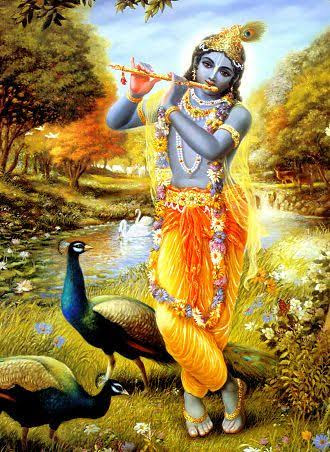
Srila Prabhupada – "Yes, human form. God is also human form. "Man is made after the shape of God." I think there is in the Bible. Is it not? So God is also like human form. Here you see Krishna, two hands, two legs."

Hari-sauri – "How do we understand, then, that there are peacocks and flowers and trees in the spiritual world? Are these not eternal forms?"

Srila Prabhupada – "[describing material form first]: Yes, they are more covered. Just like if you cover your body with blanket, the hands and legs are invisible. But you are not the blanket. So the trees and plants, they are more covered. They are not in full manifestation. The human form is the full manifestation of the soul."

Hari-sauri - "They are covered in the spiritual world?"

Srila Prabhupada - "Not in the spiritual world. There that is voluntary. Some devotee wants to serve Krsna as flower; they become flower there. If I want to be as a flower, I shall lie down at the lotus feet of Krsna, he becomes flower, voluntarily, and he can change from flower to human body. That is spiritual life. There is no restriction. If some devotee wants to serve Krishna as cow, he serves Krsna as cow, as calf, as flower, as plant, as water, as ground, field, or as father, as mother, as friend, as beloved, anything. It is inconceivable, yet a fact." (SB Canto 6 Ch 1 text 1-4, Melb, Australia May 20, 1975)

The jiva-souls (marginal living entities) can NEVER exist independently from Krsna, even though they CAN express their independent free will that Krsna provides for the purpose of allowing a "two-way" voluntary exchange of loving expressions, emotions and unique personal offerings between the jiva-souls and Kṛṣṇa.

There are five relationships the jiva souls (marginal living entities) have with Krishna explained below.

Srila Prabhupada - "Love means you take and you give also. Suppose if you love somebody and you are simply taking from him, but you don't give. Oh, do you think it is very good? No. It is not good. That is NOT love that is exploitation. If I go on simply taking from you, and if I don't offer you anything in return, that is simply exploitation." (Lecture on BG Ch 9 text 2-5, New York City, Nov 23, 1966)

Srila Prabhupada - "We have got the propensity to love. Love means somebody else. Love cannot be one or love cannot be executed only by one. There must be another one. I love somebody; somebody loves me, there must be lover, there must be beloved, and the transaction, then love." (Lecture on SB Canto 1 Ch 2 text 6, Delhi, Nov 12, 1973)

Srila Prabhupada - "Their impersonalist philosophy is "oneness." So how there be love with just one? Is it possible? Have you got any such experience that love means one? No. Love means two. There MUST be two, the lover and the beloved. Kṛṣṇa is already lover. He loves you so much that He's trying to get you back. That is Kṛṣṇa's attempt. "Please, My dear boy, or My dear friend, My dear servant..." (Lecture on SB Canto 2 Ch 1 text 3, Paris, June 12, 1974)

A devotee has a relationship with Krsna the Supreme Personality of Godhead and cause of ALL causes, in five different ways-

1. One may be a devotee in a passive state;

2. One may be a devotee in an active state;

3. One may be a devotee as a friend;

4. One may be a devotee as a parent;

5. One may be a devotee as a conjugal lover.''

Srila Prabhupada explains these 5 relationships in detail in His Books like "Nectar of Devotion".

A "PASSIVE" relationship (number one in above list) with Krsna in Vaikuntha and Goloka Vrindavana, is an almost "inactive" position the jiva souls can CHOOSE according to their desires ("free will"), such as -

A cloud in the sky,

The sky 

A blade of grass, 

A tree,

A rock or stone,

A fence,

A chair or bench,

A flag pole and a flag

A roadway, 

A chariot, etc

The point is, EVERYTHING is alive in Vaikuntha and Goloka-Vrindavana, unlike the mundane dead material creation.

This means EVERYTHING from the shoes on your feet, to the clothes you wear, are all individual jiva souls who have "shape-shifted" as that form because they have chosen to play that particular role in Vaikuntha or Goloka Vrindavana.

This is called a "passive" relationship with Krsna.

The ORIGINAL eternal form of the jiva soul, is a body like Krsnas Prabhupada has said, two arms, two legs etc like Krsna has in Vṛndāvana.

This means the 4 armed bodily form the jiva-souls have in the Vaikuntha planets that looks like Visnu - Narayana Form is NOT the original form.

This also means ALL marginal living entities (jiva-souls) originate from Goloka-Vrindavana which is an eternal fully Kṛṣṇa Consciousness "active" abode Kṛṣṇa's eternal pastimes) meaning there is no origin. 

Many jiva-souls CHOOSE to have a passive (inactive or idle) relationship with Krsna but it is NEVER impersonal.

This means they do not react visibly to something that might be expected of them, like outwardly manifesting emotions or feelings as a blade of grass or a chair that Krsna sits on.

Or like a flower or tree is only seen moving in the wind and outwardly showing no effection or passion, even though "inwardly" the jiva-soul, as that blade of grass or tree, is ecstatically and blissfully fully aware of Krsns’s personal presence, and Krsna is fully aware of those personalities as a blade of grass, a flower, a chair or a tree.

Many jiva-souls are therefore choose to be passive "living" objects in Vaikuntha or Goloka Vrindavana that do not involve visible reaction or active participation.

This is playing a passive or seemingly inactive role in God's Kingdom.

However one should NOT confuse a "passive relationships" in Vaikuntha or Goloka-Vrindavana with impersonal mundane "inactive nonsense" of the Mayavadis.

The fact is, Krsna's abode is full of diversity where the jiva-souls can voluntarily express various kinds of pure loving service to Krishna, from "active" service of being a Cow herd boy, to "inactive" service like being a flag on top of a flag pole or the pole. 

These relationships with Krsna are also based on reciprocation and loving exchanges too, even if the jiva-souls manifest themselves as a cloud in the sky, or a bench for Krsna to sit on, or a plate for Krsna to eat off.

Just like we enjoy relationships with our families and society, so does Krsna.

However, all of His relationships are eternal in Goloka Vrindavana as their Spiritual forms, completely free of material contamination and conditioning.

Each of Krsna’s jiva-tattva-soul devotees interacts with Him by their "free will" in one of five primary relationships as said above. 

All jiva-souls are EQUALLY intimate with Krsna because in the spiritual world Kṛṣṇa treats them all equally with loving exchanges and responds to them individually based on their expression of love for Him. 

All relationships with Krsna are equally blissful, just like one may like a carnation flower while others like rose flower.

Loving relationships with Krsna, the jiva-souls can CHOOSE from different types.

These five are -

1 - Neutrality, 

2 - Servitude, 

3 - Friendship, 

4 - Parental affection, 

5 - And conjugal love. 

Srila Prabhupada - "The jiva-soul's position in the spiritual world is voluntary. Some devotee wants to serve Krsna as flower; they become flower there. If I want to be as a flower, I shall lie down at the lotus feet of Krsna, he becomes flower, voluntarily, and he can change from flower to human body. That is spiritual life. There is no restriction. If some devotee wants to serve Krishna as cow, he serves Krsna as cow, as calf, as flower, as plant, as water, as ground, field, or as father, as mother, as friend, as beloved, anything. It is inconceivable, yet a fact." (SB Canto 6 Ch 1 text 1-4, Melb, Australia May 20, 1975)

More intimate love of Krsna reaches its summit in romantic exchanges with Krsna, each devotee can choose to experience one of these main moods- 

Devotees in the mood of "neutrality" choose to witness and support Krsna’s pastimes by their presence as plants, animals, streams, and so on, as well as normally inanimate objects like houses—all of which are fully conscious and alive in Goloka Vrindavan.

Devotees in the "service mood" choose to run errands for Krsna, pack His lunch, wash His clothes, and perform other acts of loving service for Him.

Devotees in the "fraternal mood" choose to serve Krsna by being His friends. 

They are sometimes boastful, considering themselves equal to Krsna because they have no idea Krsna is the Supreme Personality of Godhead and cause of ALL causes, nor do they care. 

In Krsna's company the cow herd boys and girls enjoy games in the beautiful country forest settings of Vṛndāvana.

Devotees who choose to be in the "parental mood", see themselves as Krsna’s provider and protector. 

Krsna behaves with them like a dependent child. His mother cuddles Him, carefully prepares His meals, and thinks only of His protection. His father sees that He has all the comforts of a normal home.

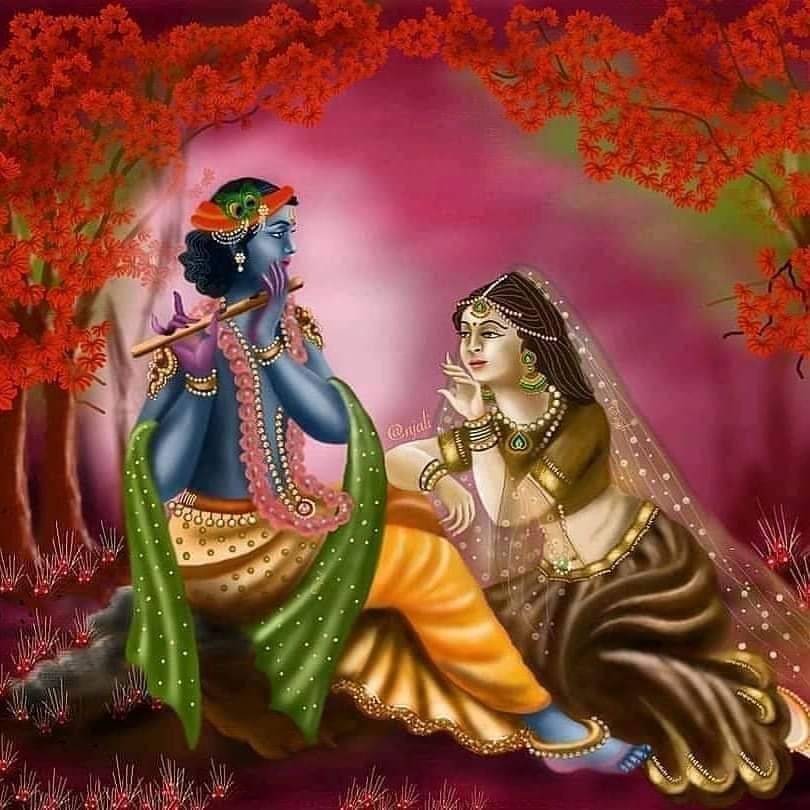
Devotees who choose to be in the "conjugal" (of whom many are also Visnu-tattva and NOT just jiva-souls) position, or romantic, mood offer service as Krsna’s girlfriends, relating with Him in the intimacy of lover and beloved.

Srila Prabhupada - "Regarding your question about our relationship with Srimati Radharani, She is the internal energy, we are marginal energy. Marginal means sometimes internal, sometimes external. When we are under the internal energy, that is our normal life, and when we are under the external energy, that is our abnormal life. Therefore, we are called marginal energy; we can be either this way or that way. But being qualitatively one with the purusa, our tendency is to remain in the internal energy. Being in the external energy is our artificial attempt. (Letter to Lilavati, Allston, Mass 25 April, 1969)

Srila Prabhupada - "When Kṛṣṇa kills the demons outside Vṛndāvana, He is not original Kṛṣṇa; He is Vāsudeva. Vāsudevaḥ sarvam iti (BG 7.19). When Kṛṣṇa is acting universally, that is Vāsudeva. Original Kṛṣṇa is ALWAYS in Vṛndāvana."

Jayatīrtha - "If the original Kṛṣṇa is always in Vṛndāvana, then why do the gopīs and Rādhārāṇī feel separation from Him?"

Srila Prabhupada - "That is here, in this material world. In the spiritual world Kṛṣṇa does not leave."

Jayatīrtha - "Oh."

Srila Prabhupāda - "And even in the material world, Kṛṣṇa superficially has gone to Mathurā, but He has captured the heart of the gopīs. So He is not leaving. Gopīs are enjoying Kṛṣṇa by separation. That is Caitanya Mahāprabhu's feeling, how He is appreciating Kṛṣṇa by separation." (Morning Walk, July 17, 1975, San Francisco).**.


Kṛṣṇa as His original form in Vṛndāvana never kills demons. Kṛṣṇa in His original feature remains in Vṛndāvana and never leaves.

Srila Prabhupāda - "When Kṛṣṇa wanted to understand Himself, He took the tendency of Śrīmatī Rādhārāṇī. And that is Caitanya Mahāprabhu". (Srimati Radharani's appearance day, September 18, 1969 in London)

Srila Prabhupāda - "Kṛṣṇa has nothing to do He’s simply engaged in enjoyment with gopīs and Rādhārāṇī. He’s NOT engaged in killing the demons. When Kṛṣṇa kills the demons He’s Vasudeva Kṛṣṇa (Vishnu-tattva); He’s NOT original Kṛṣṇa. Kṛṣṇa expands Himself. (Srimati Radharani's appearance day, September 18, 1969 in London)

Srila Prabhupada - "Even Kṛṣṇa, who knows EVERYTHING, fails to understand Rādhārāṇī. Rādhārāṇī is so great. Yes He says that. Actually, Kṛṣṇa knows everything. In order to understand Rādhārāṇī, Kṛṣṇa accepted the position of Rādhārāṇī. Kṛṣṇa wanted to understand the potency of Rādhārāṇī.

Kṛṣṇa thought that “I am full. I am complete in every respect, but still, I want to understand Rādhārāṇī. Why?” This propensity made Kṛṣṇa obliged to accept the propensities of Rādhārāṇī, to understand Kṛṣṇa, Himself.

These are, of course, very transcendental, great science. One who is advanced in Kṛṣṇa consciousness and well conversant with the śāstras, they can understand.

When Kṛṣṇa wanted to understand Himself, He took the tendency of Śrīmatī Rādhārāṇī. And that is Caitanya Mahāprabhu".

(Srila Prabhupada glorifying Srimati Radharani on Her auspicious appearance day September 18, 1969 in London)

Srila Prabhupada continues -

Srila Prabhupada - "Fifteen days after Kṛṣṇa’s birth, Rādhārāṇī appeared. Rādhārāṇī is Kṛṣṇa’s pleasure potency. Rādhā-kṛṣṇa-praṇaya-vikṛtir hlādinī-śaktiḥ.

The Lord, the Supreme Personality of Godhead, has got varieties of energies, as it is confirmed in the Vedic literature. Parāsya śaktir vividhaiva śruyate. Na tasya kāryaṁ karaṇaṁ ca vidyate.

The Supreme Lord has nothing to do personally. Na tasya kāryam. He has nothing to do. Just like here in this material world we find some very big man, political head or business head; personally, he has nothing to do.

Because he has got so many assistants, secretaries, that personally he hasn’t got to do anything. Similarly, the Supreme Personality of Godhead, full with six opulences, why He will have to do something?

No. He has got many assistants. Sarvataḥ pāṇi-pādas tat. In the Bhagavad-gītā: 

“He has got everywhere His hands and legs.”

You’ll find Kṛṣṇa, He has nothing to do. He’s simply engaged in enjoyment with gopīs and Rādhārāṇī. He’s not engaged in killing the demons. When Kṛṣṇa kills the demons He’s Vasudeva Kṛṣṇa; He’s not original Kṛṣṇa. Kṛṣṇa expands Himself.

First expansion is Baladeva. From Baladeva—

Saṅkarṣaṇa,
Pradyumna,
Aniruddha,
Vāsudeva.

So by the Vāsudeva feature He acts in Mathurā and Dvārakā. But Kṛṣṇa in His original feature, He remains in Vṛndāvana.

One of the greatest fiction writers in Bengal, Bankimchandra Chatterjee, he misunderstood Kṛṣṇa that Kṛṣṇa of Vṛndāvana, Kṛṣṇa of Dvārakā, and Kṛṣṇa of Mathurā, They’re different persons.

Kṛṣṇa (is) the same, one, but He can expand Himself in millions and trillions of forms. Advaitam acyutam anādim ananta-rūpam ādyaṁ purāṇa-puruṣam (Bs. 5.33). Advaita. Although ananta-rūpam, still, He’s ādyaṁ purāṇa-puruṣam, advaita. There is no such distinction.

So this Kṛṣṇa, when He wants to enjoy, what kind of enjoyment He will have? That has been discussed by Śrīla Jīva Gosvāmī. Kṛṣṇa is Paraṁ Brahman.

Brahman, Paramātmā, then Paraṁ Brahman. Absolute Truth, three different features. Someone is realizing the Absolute Truth as impersonal Brahman.

Jnanis, those who are trying to understand the Absolute Truth by mental speculation, by dint of his own knowledge, he’s realizing the Absolute Truth as impersonal Brahman.

And those who are trying to understand the Absolute Truth by meditation, yogis, they realize the Absolute Truth as Paramātmā. Paramātmā is situated in everyone’s heart. Īśvaraḥ sarva-bhūtānāṁ hṛd-deśe ’rjuna tiṣṭhati (Bg. 18.61).

That feature, Paramātmā feature. Aṇḍantara-sthaṁ paramānu-cayāntara-sthaṁgovindam ādi-puruṣaṁ tam ahaṁ bhajāmi. That Paramātmā feature is one expansion of Kṛṣṇa.

It is stated in the Bhagavad-gītā, athavā bahunaitena kiṁ jñātena tavārjuna ekāṁṣena viṣṭabhyāham. Ekāṁṣena. When Kṛṣṇa and Arjuna was trying to understand about different potential existence of Kṛṣṇa, so He explained in the Twelfth Chapter, “I am this. Amongst them, I am this. Amongst them…” Like that.

And He concluded that “How far I shall go on? Better try to understand that only one plenary portion of Me, by entering this universe, the whole cosmic manifestation is existing.” Ekāṁṣena sthito jagat. Jagat.

This material world is existing on one plenary portion of Kṛṣṇa. And Kṛṣṇa enters, aṇḍāntara-sthaṁ paramānu-cayāntara-stham, He enters within this universe.

Without His entering, this universe cannot exist. Just like without the spirit soul’s entering within this body, this body cannot exist.

As soon as the spirit soul goes out, immediately the body’s useless. However the body may be prime minister or anything else, as soon as the soul is out of this body, it is not worth even a farthing.

Similarly, because Kṛṣṇa enters within this universe, therefore the universe has value. Otherwise it is simply a lump of matter; it has no value. Ekāṁṣena sthito jagat.

So try to understand Kṛṣṇa. And when Kṛṣṇa want to enjoy, what kind of enjoyment that shall be?

Try to understand this point. Kṛṣṇa is so great; God is great, everyone knows. So when the great wants to enjoy, then what quality of enjoyment that should be?

That is to be understood. Rādhā-kṛṣṇa… Therefore Svarūpa Dāmodara Gosvāmī has written a verse -

rādhā-kṛṣṇa-praṇaya-vikṛtiḥ.

The loving affairs of Rādhā and Kṛṣṇa is not ordinary, these material loving affairs, although it appears like that. But one who cannot understand Kṛṣṇa, avajānanti māṁ mūḍhāḥ.

Mūḍha, rascals, fools, they understand Kṛṣṇa as ordinary man. As soon as we take Kṛṣṇa as one of us… Mānuṣīṁ tanum āśritāṁ, paraṁ bhāvam ajānantaḥ. These rascals, they do not know paraṁ bhavam.

They try to imitate Kṛṣṇa’s līlā, rāsa-līlā. There are many rascals. So these things are going on. There is no understanding of Kṛṣṇa. To understand Kṛṣṇa is very difficult.

manuṣyāṇāṁ sahasreṣu kaścid yatati siddhaye yatatām api siddhānāṁ kaścin māṁ vetti tattvataḥ (Bg. 7.3)

Out of millions of persons, one may try to make his life perfect.

Everyone is working like animal. There’s no question of perfection of life. The animal propensities: eating, sleeping, mating and defending, so everyone is engaged like animals. They have no other business, just like animal, hogs, dogs, whole day and night working: “Where is stool? Where is stool?” And as soon as he gets some stool, gets some fat, “Where is sex? Where is sex?” No consideration of mother or sister. This is hog’s life!

So human life is not meant for hog civilization.

So modern civilization is hog civilization, although it is polished with shirt and coat. So, we shall try to understand.

This Kṛṣṇa consciousness movement is for understanding Kṛṣṇa. For understanding Kṛṣṇa, it requires little labor, austerity, penance.

Tapasya brahmacāryeṇa śamena damena ca.

Tapasya, yes, one has to undergo tapasya; brahmacārya, celibacy. Tapasya.

Brahmacārya means stopping sex life or controlling sex life. Therefore Vedic civilization is, from the very beginning, to train the boys to become brahmacārī, celibacy.

Not that modern days, the schools, boys and girls, ten years, twelve years, they’re enjoying. The brain is spoiled. They cannot understand higher things. The brain tissues are lost.

So without becoming brahmacārī, nobody can understand spiritual life.

Tapasya brahmacāryeṇa śamena damena ca. Śama means controlling the senses, controlling the mind; damena, controlling the senses; tyāgena; śaucena, cleanliness; tyāga, tyāga means charity.

These are the processes for understanding oneself, self- realization. But in this age it is very difficult to undergo all these processes. Practically it is impossible. Therefore Lord Caitanya, Kṛṣṇa Himself, has made Himself easily available by one process:

harer nāma harer nāma harer nāmaiva kevalam kalau nāsty eva nāsty eva nāsty eva gatir anyathā (Adi 17.21)

In this age, Kali-yuga… Kali-yuga is considered to be the most fallen age. We are thinking that we are making very much advance, but it is the most fallen age.

This is because people are becoming like animals. As the animals have no other interest than four principles of bodily necessities—eating, sleeping, mating and defending.

So in this age people are interested with four principles of bodily want. They have no information of the soul, neither they are prepared to realize what is soul.

That is the defect of this age. But human form of life is especially meant for realizing himself, “What I am?” That is the mission of human life. Athāto brahma jijñāsā.

This life is meant for inquiring about Brahman. Brahman, Paramātmā, Bhagavān. These inquiries should be there. Jijñāsu. They are called jijñāsu, brahma-jijñāsa, jijñāsu, inquiry.

As we inquire every morning, “What is the news today?” Immediately we pick newspaper. That inquisitiveness is there. But we are inquiring very base things only. There is no desire to inquire about the highest possibility, brahma-jñāna. That is the lack of this modern civilization.

Inquiring how to earn money: divā cārthehayā rājan kuṭumba-bharaṇena vā (SB 2.1.3) Not only in this age.

In this age it has become the principal factor, but in this material world everyone is engaged simply for these bodily necessities of life. Nidrayā hṛiyate naktam: at night they sleep very sound sleep, snoring. Or sex life. Nidrayā hṛiyate naktaṁ vyavāyena ca vā vayaḥ (SB 2.1.3).

In this way they’re wasting time. And at daytime, divā cārthehayā rājan… And during daytime,

“Where is money? Where is money? Where is money?” Artha ihāya. Kuṭumba- bharaṇena vā.

And as soon as one gets money, then how to purchase things for family, that’s all. Shopping, storing. This is the engagement of materialistic life.

Out of that, one who is actually intelligent… Manuṣyāṇāṁ sahasreṣu kaścid yatati siddhaye (Bg. 7.3).

Out of many such foolish persons engaged in sleeping, mating, earning money, and providing family with nice apartment and food… This is the general occupation.

So out of many thousands of men like that, one is inquisitive how to make perfect this human form of life. Manuṣyāṇāṁ sahasreṣu kaścid yatati siddhaye.

Siddhi means perfection. So this life is meant for perfection. What is perfection?

Perfection means that we do not want miserable condition of life, and we have to get out of it. That is perfection.

Everyone is trying to get out of miserable condition of life. But they do not know what is the actual position of miserable life. Miserable condition of life: tri-tāpa-yantanaḥ.

So this is called mukti, or liberation, from the misera… Ātyantika-duḥkha-nivṛttiḥ. Duḥkha, duḥkhameans distress.

So everybody is trying to get out of distress. But he does not know what is the ultimate goal of getting out of distress. Na te viduḥ. They do not know!

Na te viduḥ svārtha- gatiṁ hi viṣṇum (SB 7.5.31). One can be out of distress when he approaches Viṣṇu. Tad viṣṇuṁ paramaṁ padaṁ sada paśyanti sūrayaḥ. Tad viṣṇoḥ paramaṁ padam.

The Viṣṇu planet… Just like here in the material world they’re trying to go to the moon planet, but these foolish people do not know what they’ll gain even they go to the moon planet. It is one of the material planets.

Kṛṣṇa has already said in the Bhagavad-gītā, abrahma-bhuvanāl lokān. What to speak of this moon planet—it is very near—even if you go to the topmost planet, which is known as Brahmaloka.

That is in your front, you can see every day, every night, how many lokas and planets are there. But you cannot go there. You are simply trying to go to the nearest planet. That is also failure.

So what is your scientific improvement? But there is possibility. Ā-brahma-bhuvanāl lokān. You can go.

The material scientists’ calculation is that if one goes forward for forty thousands of years in the light speed, light- year speed, then one can approach the topmost planet of this material world.

So at least in the modern scientific calculation, it is impossible. But one can go; there is process. That we have tried to explain in our small booklet Easy Journey to Other Planets.

By yogic process one can go any planet he likes. That is the yogic perfection. When a yogi becomes perfect, he can go to any planet he likes, and the yoga practice goes on, unless the yogi thinks himself that he has made himself perfect to travel to any planet he likes. That is perfection of yoga practice.

So, these are the perfection of life, not that teeny, floating sputnik. (laughter) They do not know what is perfection of life.

You can go anywhere. A living entity’s name is sarva-gaḥ.

Sarva-gaḥ means “one who can go anywhere he likes.”

Just Nārada Muni. Nārada Muni can travel anywhere he likes, either in the spiritual world or in the material world. So you can also do that. There is possibility.

There was a Durvāsā Muni, great yogi. Within one year he traveled all over the universe and went to Viṣṇuloka and again came back. That is recorded in the history. So these are the perfections of life. And how these perfection can be attained?

By understanding Kṛṣṇa. Yasmin vijñāte sarvam eva vijñātaṁ bhavanti. The Upaniṣad says, if you simply understand Kṛṣṇa, then all these things can be understood very easily. Kṛṣṇa consciousness is such a nice thing.

So today, this evening, we are talking about Rādhāṣṭamī. We are trying to understand the chief potency of Kṛṣṇa. Rādhārāṇī is the pleasure potency of Kṛṣṇa. As we understand from Vedic literature, Kṛṣṇa has many varieties of potencies. Parāsya śaktir vividhaiva śruyate.

Just like the same example, as a big man has got many assistants and secretaries so that he hasn’t got to do anything personally, simply by his will everything is done.

Similarly, the Supreme Personality of Godhead has got varieties of energies, and everything is being done so nicely.

Just like this material energy. This material world, where we are now living… This is called material energy. Bahir-aṅga-śakti.

The Sanskrit name is bahir-aṅga means the external energy of Kṛṣṇa. So how nicely it is being done, everything in the material energy. That is also explained in the Bhagavad-gītā, mayādhyakṣeṇa prakṛtiḥ sūyate sa-carācaram: (Bg. 9.10)

“Under My superintendence the material energy is working.”

The material energy is not blind. It is… On the background there is Kṛṣṇa. Mayādhyakṣeṇa prakṛtiḥ (Bg. 9.10).

Prakṛti means this material energy. This is the external energy.

Similarly, there is another energy, which is the internal energy. By the internal energy the spiritual world is being manifested. Parās tasmāt tu bhavaḥ anyaḥ (Bg. 8.20)

Another energy, parā, superior, transcendental, the spiritual world.

As this material world is being manipulated under the external energy, similarly, the spiritual world is also conducted by the internal potency.

That internal potency IS Rādhārāṇī.

Rādhārāṇ, so today is Rādhārāṇī’s appearance day. So we should try to understand Rādhārāṇī’s feature.

Rādhārāṇī is the pleasure potency, hlādinī-śakti. Ānandamayo ’bhyāsāt.

In the Vedānta-sūtra the Absolute Truth is described as ānandamaya, always in pleasure potency. That ānandamayapotency… Just like ānanda.

When you want ānanda, pleasure, you cannot have it alone. Alone, you cannot enjoy.

When you are in the circles of friend or family or other associates, you feel pleasure.

Just like I am speaking. The speaking is very pleasing when there are many persons here. I cannot speak alone here. That is not ānanda.

I can speak here at night, dead of night, nobody here. That is not ānanda.

Ānanda means there must be others.

So because Kṛṣṇa, the Absolute Truth, is ānandamaya, therefore eko bahu syām, He has become many.

We are also Kṛṣṇa’s part and parcel, to give pleasure to Kṛṣṇa.

And the chief pleasure potency is Rādhārāṇī.

rādhā-kṛṣṇa-praṇaya-vikṛtir hlādinī-śaktir asmād ekātmānāv api bhuvo (purā) deha-bhedo-gatau tau caitanyākhyaṁ prakaṭam adhunā tad-dvayaṁ caikyam āptaṁ rādhā-bhāva-(dyuti)-suvalitaṁ naumi kṛṣṇa-svarūpam (Cc. Adi 1.5)

So Kṛṣṇa is Param Brahman, as you know from the Bhagavad-gītā. When Arjuna understood Bhagavad-gītā, he affirmed Kṛṣṇa, paraṁ brahma paraṁ dhāma pavitraṁ paramaṁ bhavān (Bg. 10.12)

So Kṛṣṇa is Param Brahman.

So in this material world we see that a great, saintly person, simply to enjoy brahmānanda, he gives up everything of material enjoyment.

He becomes sannyāsī. Ahaṁbrahmāsmi. Just to understand that he is in Brahman realization.

So if one has to give up everything material for Brahman realization, do you think that Paraṁ Brahman, the Supreme Brahman, can enjoy anything material?

No. Kṛṣṇa’s enjoyment is nothing material. This point should be understood.

For Brahman realization we are giving up everything material. And how Paraṁ Brahman can enjoy anything material? This question has been very much nicely discussed by Jīva Gosvāmī.

So when the Param Brahman… First of all, the Param Brahman information is NOT there in this material world. Little Brahman information is there. Or little Paramātmā information is there. But NOT Param Brahman, or Bhagavān, information.

Therefore it is said, manuṣyāṇāṁ sahasreṣu kaścid yatati siddhaye (Bg. 7.3). Siddhaye means to understand Brahman or Paramātmā. But out of many such persons who have realized Brahman and Paramātmā, hardly a person can know Kṛṣṇa.

First of all, we can understand about Kṛṣṇa’s pleasure potency? If I want to know some big man. That is one process. And without knowing that big man, how I can understand about his internal affairs?

Similarly, if we do not understand Kṛṣṇa, how we can understand how Kṛṣṇa is enjoying? That is not possible. But the Gosvāmīs, they’re giving us information what is the pleasure potency of Kṛṣṇa.

That is Śrīmatī Rādhārāṇī.

So we have described about the Rādhā-Kṛṣṇa loving affairs in our Teachings of Lord Caitanya in page 264.

If you have got this book, you can read it, how the reciprocation of loving affairs of Rādhā-Kṛṣṇa is there, transcendental.

So our today prayer to Rādhārāṇī… We pray to Rādhārāṇī because She is the pleasure potency of Kṛṣṇa. Kṛṣṇa means “all-attractive.” But Rādhārāṇī is so great that She attracts Kṛṣṇa. Kṛṣṇa is all-attractive, and She is attractive (attractor) of Kṛṣṇa.

So what is the position of Śrīmatī Rādhārāṇī?

We should try to understand this day and offer our obeisances to Rādhārāṇī. Rādhe vṛndāvaneśvarī.

tapta-kāñcana-gauraṅgī rādhe vṛndāvaneśvarī vṛṣabhānu-sute devī pranamāmi hari-priye

Our business is “Rādhārāṇī, You are so dear to Kṛṣṇa. So we offer our respectful obeisances unto You.”

tapta-kāñcana-gauraṅgī rādhe vṛndāvaneśvarī vṛṣabhānu-sute devī pranamāmi hari-priye

Rādhārāṇī is hari-priyā, very dear to Kṛṣṇa.

So if we approach Kṛṣṇa through Rādhārāṇī, through the mercy of Rādhārāṇī, then it becomes very easy.

If Rādhārāṇī recommends that - “This devotee is very nice,” then Kṛṣṇa immediately accepts, however fool I may be.

Because it is recommended by Rādhārāṇī, Kṛṣṇa accepts.

Therefore in Vṛndāvana you’ll find all the devotees, they’re chanting more Rādhārāṇī’s name than Kṛṣṇa’s.

Wherever you’ll go, you’ll find the devotees are addressing, “Jaya Rādhe.” You’ll find still in Vṛndāvana. They are glorifying Rādhārāṇī.

They’re more interested, worshiping Rādhārāṇī.

Because however fallen I may be, if some way or other I can please Rādhārāṇī, then it is very easy for me to understand Kṛṣṇa. Otherwise,

manuṣyāṇāṁ sahasreṣu kaścid yatati siddhaye yatatām api siddhānāṁ kaścid vetti māṁ tattvataḥ (Bg. 7.3)

If you go by the speculative process to understand Kṛṣṇa, it will take many, many, many lives.

But if you take devotional service, just try to please Rādhārāṇī, and Kṛṣṇa will be gotten very easily.

Because Rādhārāṇī can deliver Kṛṣṇa. She is so great devotee, the emblem of mahā-bhāgavata. Even Kṛṣṇa cannot understand what is Rādhārāṇī’s quality.

Even Kṛṣṇa, although He says vedāhaṁ samatītāni, “I know everything,” still, He fails to understand Rādhārāṇī.

Rādhārāṇī is so great. Yes He says that.

Actually, Kṛṣṇa knows everything. In order to understand Rādhārāṇī, Kṛṣṇa accepted the position of Rādhārāṇī. Kṛṣṇa wanted to understand the potency of Rādhārāṇī.

Kṛṣṇa thought that “I am full. I am complete in every respect, but still, I want to understand Rādhārāṇī.

Why?”

This propensity made Kṛṣṇa obliged to accept the propensities of Rādhārāṇī, to understand Kṛṣṇa, Himself.

These are, of course, very transcendental, great science. One who is advanced in Kṛṣṇa consciousness and well conversant with the śāstras, they can understand.

But still, we can discuss from the śāstra.

When Kṛṣṇa wanted to understand Himself, He took the tendency of Śrīmatī Rādhārāṇī. And that is Caitanya Mahāprabhu.

Rādhā-bhāva-dyuti-suvalitam. Caitanya Mahāprabhu is Kṛṣṇa, but He has accepted the propensities of Rādhārāṇī.

As Rādhārāṇī is always in feelings of separation of Kṛṣṇa, similarly, in the position of Rādhārāṇī, Lord Caitanya was feeling separation of Kṛṣṇa. That is the teachings of Lord Caitanya, feelings of separation, not meeting.

The process of devotional service taught by Caitanya Mahāprabhu and His disciplic succession is how to feel separation from Kṛṣṇa. That is Rādhārāṇī’s position, always feeling the separation.

The Gosvāmīs, they also, when they were in Vṛndāvana, they never said that “I have seen Kṛṣṇa.” Although they were the most perfect, they never said that “I have seen Kṛṣṇa.”

Their prayers were like this:

he rādhe! vraja-devīke! he nanda-suno! kutaḥ. He rādhe, Rādhārāṇī, he rādhe! vraja-devīke! ca.

Rādhārāṇī does not remain alone. He (She) remains always with His (Her) friends, vraja-devī, Lalitā or Viśākha and other damsels of Vṛndāvana.

So the Gosvāmīns are praying, in their mature stage, when they were living at Vṛndāvana, they were praying in this way, he rādhe! vraja-devīke! ca lalite! he nanda- suno! kutaḥ:

“Where, Rādhārāṇī, where You are? Where are Your associates? Where You are, Nanda-suno, the son of Nanda Mahārāja, Kṛṣṇa? Where you are, all?”

They were searching after. They never said, “I have seen Kṛṣṇa dancing with the gopīs. Last night I saw.” (laughter) This is sahajiyā. This is not mature devotee. This is called… They are called sahajiyā.

They take everything very cheap—Kṛṣṇa very cheap, Rādhārāṇī very cheap—as if they can see every night. No.

The Gosvāmīs do not teach us like that. They’re searching after. He rādhe! vraja-devīke! ca lalite! he nanda-suno! kutaḥ, śrī-govardhana-pādapa-tale kālindī-vanye kutaḥ:

“Are you there under the Govardhana Hill or on the banks of the Yamunā?”

Kālindī-vanye kutaḥ. Ghoṣantāv iti sarvato vraja-pure khedair mahā-vihvalau.

Their business was crying like this,

“Where You are? Where You are, Rādhārāṇī? Where you are, Lalitā, Viśākha, the associates of Rādhārāṇī?

Where You are, Kṛṣṇa? Are You near Govardhana Hill or on the bank of the Yamunā?”

Ghoṣantāv iti sarvato vraja-pure. So throughout the whole tract of Vṛndāvana they were crying and searching after Them, khedair mahā-vihvalau, as if madman. Khedair mahā-vihvalau. Vande rūpa-sanātanau raghu- yugau śrī-jīva-gopālakau.

So we have to follow the footprints of the Gosvāmīs, how to search out Kṛṣṇa and Rādhārāṇī, Vṛndāvana, or within your heart.

That is the process of Caitanya Mahāprabhu’s bhajana: feeling of separation, vipralambha, vipralambha-sevā.

Just like Caitanya Mahāprabhu, feeling the separation of Kṛṣṇa, He was falling down on the sea. He was coming out of His rest room or His bedroom and going out at dead of night.

Nobody knew where He has gone. So that was His searching. This process of devotional service is taught by Caitanya Mahāprabhu. Not that very easily, “We have seen Kṛṣṇa or seen Rādhārāṇī in rāsa-līlā.” No, not like that.

Feel the separation.

The more you feel separation from Kṛṣṇa, you should understand that you are advancing but don’t try to see Kṛṣṇa artificially"(Lecture on Srimati Radharani's appearance day, September 18, 1969 in London)


Thursday, July 15, 2021

Finally taṭastha-sakti (a name among many for the marginal living entity) is correctly understood.

Taṭastha-sakti is another name among many, describing a particular condition of the marginal living entity (jiva-soul).

The marginal plane is the category the individual jiva-souls are part of, it is inbetween the Spiritual energy (Internal potency) and the material energy (external potency)

Srila Prabhupada - "Krsna has three main energies

1 - external energy

2 - internal energy,

3 - marginal energy.

The external energy is this material expansion, manifestation.

Similarly, there is internal energy, the spiritual world manifestation, and in between them there is another energy called marginal energy, taṭastha, that we are, we living entities. 

We are His marginal energy.

Marginal energy means we can live either in this external energy or in the internal energy, in between.

So at the present moment we are living in the external energy. But this external energy is also Kṛṣṇa's energies, God's energy. It is not different from Him.

But the external energy means we are captivated by the external energy. But the external energy is not permanent.

The internal energy is permanent. The spiritual world is permanent, and we are also permanent, jīva-bhūta. Na hanyate hanyamāne śarīre (BG 2.20). (Lecture on BG 9.4 -- Melbourne, April 23, 1976)

Srila Prabhupada - "Regarding your question about our relationship with Srimati Radharani, She is the internal energy, we are marginal energy. 

Marginal means sometimes internal, sometimes external. 

When we are under the internal energy, that is our normal life, and when we are under the external energy, that is our abnormal life. 

Therefore, we are called marginal energy; we can be either this way or that way. 

But being qualitatively one with the purusa, our tendency is to remain in the internal energy. Being in the external energy is our artificial attempt. (Letter to Lilavati, Allston, Mass 25 April, 1969)

What is the meaning of tatastha-sakti?

Srila Prabhupada - "So this material world is the taṭastha (conditioned characteristics), and the Spiritual Worlds are the "personal" (Vaikuntha characteristics). So our effort is to get out of this taṭastha (conditioned characteristics) and to enter the permanent characteristics (Vaikuntha and Goloka-Vrindavana). 

That is called spiritual elevation". (Lecture on CC Madhya-lila 20.354-358 — New York, December 28, 1966)

Srila Prabhupada - "Because the individual soul is apt to fall down sometimes under the clutches of māyā, it is called Taṭastha-śakti. 

Just like in the seaside the shore, the beach, sometimes you see it is covered by water and sometimes it is land; similarly, when we are covered by māyā, that is our jīva-bhūta stage, and when there is no more covering, that is brahma-bhūta stage. 

When we are Kṛṣṇa conscious, then we are brahma-bhūta (SB 4.30.20), and when we are not Kṛṣṇa conscious, we are materially conscious, that is māyā". (Lecture on BG 7.4-5 -- Bombay, March 30, 1971)

It is said by some religious groups that the marginal living entities (jiva-souls) are generated from a clear (impersonal) state of consciousness called tatastha-sakti (which is also the marginal plane), but this should be more clearly understood.

Tatastha-sakti is a terminology that means the marginal living entities (jiva-souls) who are in a category in-between the internal potency and external potency of the Lord, are in the material conditioned state.

Krsna's marginal living entities are a universal collective of individual jiva-souls that are part and parcel of Krsna whose full potential is living in the internal potency or energy (spiritual realm) of Kṛṣṇa.  

When the marginal living entities (jiva-souls) are covered by the external energy (matter) only then are they called tatastha-sakti. 

Each jiva-soul has 78.125% of Krsna's 100% qualities.

This 78.125% means each individual jiva-soul or marginal living entity can possess 50 of Krsna's 64 attributes.

Srila Prabhupada - "The spiritual world is expansion of Kṛṣṇa's internal energy, and this material world is Kṛṣṇa's expansion of external energy, and we living entities, we are expansion of marginal energy.

So three energies. Krsna has got multi-energies. All the multi-energies grouped in three headings:

1 - antaraṅga-śakti,

2 - bahiraṅga-śakti,

3 - taṭastha-śakti.

1 - Antaraṅga-śakti means internal energy,

2 - bahiraṅga śakti means external energy,

3 - taṭastha-śakti means these living entities.

We are śakti; we are energy. (jiva-tattva) We are not the energetic (Visnu-tattva)

The Māyāvādī philosopher says that because the energies are not outside Brahman, therefore they're all the same. This is monism.

Our Vaiṣṇava philosophy is that energy (is) simultaneously one and different.

When you perceive heat, we understand, "Oh, there is fire." But that does not mean that because I am getting some heat, I am on the fire

Try to understand this philosophy.

Therefore here it is said vijānataḥ - "one who knows."

So their ekatvam, Māyāvāda philosophy's ekatvam, oneness, and our ekatvam of oneness—a little different.

They say that the energy's false; the Brahman is real. Brahmā satyaṁ jagan mithyā.

We say that because Brahman is truth, therefore His energy's also truth. That is the difference between Vaiṣṇava philosophy and Māyāvāda philosophy. We cannot say that energy is false. Energy is temporary; this external energy is temporary, not false.

Although, suppose we have got some trouble. There are so many kinds of troubles pertaining to the body, mind, external affairs. But that trouble comes and goes. But when the trouble is there, it is true. We feel the consequence. We cannot say it is false.

The Māyāvādī philosophers say that it is false. But when he's troubled, why he's so much disturbed? So that is not false. Therefore this very word is used: vijānataḥ, "one who knows."

Perfect knowledge must be there, vijānataḥ. When one is actual knower of the things, tatra ko mohaḥ, then there is no illusion.

Illusion is for him who does not know things. But one who knows, there is no illusion.

Tatra ko mohaḥ kaḥ śoka. No lamentation. When you are perfectly in conviction that there is nothing except Kṛṣṇa, and Kṛṣṇa's energy, the same, then there is no moha—moha means illusion—and śoka (Lecture on Sri Isopanishad Los Angeles, May 10, 1970)

The marginal living entities (jiva-souls) are therefore ALWAYS found throughout the entire Spiritual Sky in four different realms-

1 - From associating with Krsna in Goloka-Vrindavana as a friend and four other different ways.

2 - Serving Visnu who is known as the Supreme God on the Vaikuntha Planets.

3 - Being embodied (covered) in a temporary material bodily vessel in the material creation.

4 - And attempting to cease or extinguish one's existence by merging into the dormant inactive impersonal Brahmajyoti.

Entering the Impersonal Brahmajyoti or Brahman to Vaiṣṇavas, is considered Spiritual suicide.

However, such merging is also only temporary even though the jiva-soul can stay in that dormant inactive condition for a very, very very long time.

These dormant (inactive) jiva-souls eventually falls out of the impersonal Brahmajyoti because the nature of the jiva-soul is to be ALWAYS active and have a reciprocal personal relationship with Krsna in Goloka-Vrindavana, or with Visnu on the Vaikuntha Planets.

In fact, the jiva-souls can stay there hovering in the impersonal Brahmajyoti for so long that when they again awaken from their impersonal inactive slumber, they wrongly believe the impersonal Brahmajyoti is their origin.

They forget they fell to that dormant condition in the first place a long, long, long time ago that can equal quadrillions of life times of Lord Brahma who lives for 311 trillion and 40 billion human years.

Therefore the "jiva-souls" (marginal living entities) did NOT originate from some impersonal inactive place or plane some call a clear sheet of consciousness or tatastha-sakti because ORIGINALLY all jiva-souls were with Krsna.

However, at sometime a small minority of jiva-souls fell to the material creation from Vaikuntha or Goloka-Vrindavana, then again, after sometime in the material creation trapped in the cycle of repeated birth and death, fell further to the impersonal Brahmajyoti or Brahman attempting to escape the frustration of repeated birth and death in the decaying material creation. 

The marginal plane is also called tatastha-sakti but that particular word is used more to describe the jiva-souls who are in the material creation and impersonal Brahmajyoti as Prabhupada explains.

Srila Prabhupada - "So this material world is the taṭastha (conditioned) characteristics, and the spiritual world is the "personal" characteristics. So our effort is to get out of this taṭastha (conditioned) characteristics and to enter the permanent characteristics (Vaikuntha). That is called spiritual elevation". (Lecture on CC Madhya-lila 20.354-358 — New York, December 28, 1966)

The term tatastha-sakti is generally not used to describe souls in the Spiritual world, as said above, it is used to describe those in the material worlds and the impersonal Brahmajyoti.

Tatastha-sakti is also known as the marginal plane or energy however, it is important to understand the marginal living entities in the Spiritual Worlds are NOT referred to as tatastha-sakti even though they are ALWAYS "marginal living entities".

The idea that the jiva-souls originate from some place called tatastha-sakti (marginal plane) is NOT technically correct because the "marginal living entities" are a collective of eternal jiva-souls without any beginning or origin point spread throughout the Spiritual Sky.

Therefore in the impersonal Brahmajyoti and material creation, the marginal living entities (jiva-souls) are known as tatastha-sakti.

As said above, tatastha-sakti is a "conditioned" designation describing those jiva-souls in the impersonal Brahmajyoti and material creation, and NOT those jiva-souls (marginal living entities) who are in Vaikuntha and Goloka Vrindavana.

This is important to try and understand as the marginal living entity has many different names describing their position and condition, and tatastha-sakti is just one of those names.

The jiva-souls (marginal potency) were NOT created from a "clear (inactive) sheet of consciousness" or tatastha-sakti because they have ALWAYS existed everywhere (sarva-gatah means life is everywhere).

The jiva-souls may fall to an "inactive" dormant state in the impersonal Brahmajyoti as said above, but they certainly did NOT originate from there, nor did they originate from tatastha-sakti.

Even entering the impersonal Brahmajyoti or Brahman is also only temporary relief for the jiva-souls who entered there to escape the suffering and pain of being embodied in the material creation.

Although they can stay in the impersonal Brahmajyoti for a very, very, very long time, so long a time that some foolishly believe it is where they originated from after emerging from there. The dormant inactive aspect of the Brahmajyoti is NOT the origin of the jiva-soul, it is actually a fallen condition.

The fact is, as emphasised, the individual jiva-souls are NOT literally generated from any origin including the impersonal Brahmajyoti 

As explained above, this is because they have ALWAYS existed as part and parcel of the "marginal plane of Krsna's energies who are individual jiva-souls spread throughout the entire Spiritual Sky (material and Spiritual Worlds).

The jiva-souls or marginal living entities (as individual persons) are throughout the Spiritual Sky that includes Vaikuntha, Goloka Vrindavana, the material creation and the dorment impersonal Brahmajyoti.

The marginal living entities are a unlimited number of individual PERSONS (jiva souls) who in their full potential are as follows-

sat,

chit,

ananda,

vigraha.

This means in English the individual jiva-souls are-

Eternity,

Knowledge,

Bliss,

Bodily form.

This ORIGINAL eternal form of the jiva-soul is a bodily form like Krsnas Prabhupada has said, two arms, two legs etc like Krsna has in Vṛndāvana.

All of Krsna's marginal so called 'sparks' and so called 'atoms (souls) in the effulgence that impersonalists claim are bodiless and dormant, are in that conditioned state because they are fallen and have forgotten their original two armed spiritual bodily form in Goloka Vrindavana.

Only in the conditioned fallen state can the marginal living entity (jiva-souls) merge into the impersonal Brahmajyoti.

As said above, the marginal living entities or jiva-souls are not called tatastha sakti in Vaikuntha or Goloka Vrindavana as Prabhupada has explained above.

Revatīnandana - "Srila Prabhupāda you very clearly explained to me once in a letter that if the spirit soul then goes into the brahmajyoti, he is considered still fallen. Still fallen. 

Does that means the whole brahmajyoti is composed of fallen souls?

You see my question? If I go there, I'm a jīva-soul, and I go to the brahmajyoti I'm still fallen".

Srila Prabhupāda - "Yes".

Revatīnandana - "That means all jīva-souls there are also fallen souls?".

Srila Prabhupāda - "Yes". (Room Conversation August 17, 1971, London)

Srila Prabhupada - ''Existence in the impersonal brahman is also within the category of non-Krsna consciousness. 

Those who are in the brahman effulgence are also in the fallen condition, so there is no question of falling down from a fallen condition. (Letter to: Revatinandana, Los Angeles 13 June, 1970)

Srila Prabhupada - ''When fall takes place, it means falling down from the non-fallen condition. The non-fallen condition is Krsna consciousness'' (Letter to: Revatinandana, Los Angeles 13 June, 1970)

In the jiva-souls original state, they have the same bodily features like Krishna - sat-cit-ananda-vigraha.

The full potential and original feature of all marginal living entities is a two arm human looking form.

Devotee – “Is the original body of the spirit soul a human form?”

Srila Prabhupada – “Yes, human form. God is also human form. "Man is made after the shape of God." I think there is in the Bible. Is it not? So God is also like human form. Here you see Krsna, two hands, two legs”.

Hari-sauri – “How do we understand, then, that there are peacocks and flowers and trees in the spiritual world? Are these not eternal forms?”

Srila Prabhupada – “[describing material form first]: Yes. They are more covered. Just like if you cover your body with blanket, the hands and legs are invisible. But you are not the blanket. So the trees and plants, they are more covered. They are not in full manifestation. The human form is the full manifestation of the soul”.

Hari-sauri - “They are covered in the spiritual world?”

Srila Prabhupada - “Not in the spiritual world. There that is voluntary. 

Some devotees want to serve Krsna as flower; so they become flower there. 

If I want that, to be a flower I shall lie down at the lotus feet of Krsna, then he become flower, voluntarily, and he can change his, from flower to human body. 

That is spiritual life. There is no restriction. 

If some devotee wants to serve Krsna as cow, he serves Krsna as cow, as calf, as flower, as plant, as water, as ground, field, or as father, as mother, as friend, as beloved, anything. It is inconceivable, yet a fact". (Srimad Bhagavatam 6.1.1-4 - Melbourne, May 20, 1975)

Ye yatha mam prapadyante tams tathaiva bhajamy aham [Bg. 4.11].

That is Krsna's all-powerfulness, spiritual life."

The English word "generated" can be misleading if not properly understood because that word can also mean a beginning point, or an origin point.

However, the jiva-souls have no origin or beginning point. 

This is because they have ALWAYS existed and were NEVER created as Bhagavad Gita teaches us. (BG 2.12)

The marginal living entities (jiva-souls) were always originally a bodily PERSON first, but sometime later, due to fall down from the Vaikuntha or Goloka-Vrindavana, they eventually entered the dormant impersonal Brahmajyoti, an inactive dormant almost dead condition of consciousness.  

They can also enter into the material atom in a dormant inactive consciousness state as Prabhupada explained to Tamal Krsna Maharaj that the jiva-soul and Visnu (Paramatma) are in every atom too.

Tamala Krsna - "Srila Prabhupada, someone asked a question the other day about the atom which I couldn’t give the answer to. His question is that if we say that within the atom the living entity, the jiva, is present, and life symptoms means six symptoms of birth, growth"

Srila Prabhupada - "That’s all right. Their life symptoms has not yet come. But there is".

Jayadvaita - "Potential".

Srila Prabhupada - "Yes".

Tamala Krsna - "His question was, it was sort of a dual question. At what time, or what…? Just like at the time of disintegration of this body, the living entity leaves this body and the body disintegrates, so does the atomic body also disintegrate when the living entity leaves it and moves to a higher body?"

Srila Prabhupada - "Atomic body? Atomic body means material body. Unless you are free from this material body, the atomic body will go on with you. That means unless you are mukta, the atomic body will go on. Mind, intelligence, ego — they are also atomic, finer atomic body (subtle body)".

Tamala Krsna - "But within each atom the living entity is present?"

Srila Prabhupada - "Yes. God is present; therefore living entity is present".

Tamala Krsna - "So the living entity is present within the atom just as I am present within this body. When I leave this body, my body breaks apart".

Srila Prabhupada - "Yes, you leave this body, enter another body".

Tamala Krsna - "Right".

Srila Prabhupada - "By nature’s law".

Tamala Krsna - "And when I leave this body, the body breaks apart".

Srila Prabhupada - "Eh?"

Tamala Krsna - "When I leave this body, the body dis…"

Srila Prabhupada - "The body is already atomic combination".

Tamala Krsna - "Yes".

Srila Prabhupada - "So it remains atomic combination. You leave the body".

Tamala Krsna - "Yes. It remains…"

Srila Prabhupada - "You leave the house. That does not mean the house is finished".

Tamala Krsna - "Right, I can understand that".

Hamsaduta - "He’s asking that if the soul leaves the atomic particle, then does the particle break apart. Isn’t it?"

Srila Prabhupada - "No, no. You have not left atomic particle".

Tamala Krsna - "No, but you, you’re… I think you were saying that within the atom there’s also a living entity. So when that living entity leaves the atomic particle does the particle break apart? Or doesn’t it? I mean what…?"

Srila Prabhupada - "Just try to understand. From the sastra, you understand that andantara-stham: “God lives within the atom.”

Tamala Krsna - "Yes".

Srila Prabhupada - "And when the God is there, living entity’s also there. This… This much you try to understand. Because God and living entity, they remain together, as two friends. God is trying to save this fallen friend. That is the information from Upanisad. So when God is there, the living entity is also there". 

Rupanuga - "So Paramatma and jiva-soul are always together?". 

Srila Prabhupada - "Yes". 

Pancadravida - "The jivas inside the atom, are they like impersonalists who are in the Brahman?" 

Srila Prabhupada - "That you consider. He has not developed his consciousness. Practically, it is like dead". (Morning Walk April 4 1975, Mayapur)

Srila Prabhupada – "There is no new soul. New and old are due to this material body, but the soul is NEVER born and NEVER dies, so if there is no birth, how can there be new souls?''. (Letter to Jagadisa 7/9/1970)

The use of this word "generated" really means the jiva-souls (marginal living entities) are part and parcel of a category called the 'marginal energy, potency or plane', who are a collective of unlimited individual jiva-souls who are eternal, meaning they have ALWAYS existed in all the Spiritual Sky but are ONLY called tatastha-sakti while conditioned in the material creation and impersonal Brahmajyoti.

As said above, the jiva-souls were NEVER created from any origin (starting point) because there is NO origin of the jiva-souls, they have ALWAYS existed without beginning or end.

The jiva-souls are always known as the marginal living entities in Vaikuntha and Goloka-Vrindavana AS their perpetual Svarupa bodies of their choice, and NOT known there as tatastha-sakti (even though they are always marginal living entities as said above)

Srila Prabhupada - "Because the individual soul is apt to fall down sometimes under the clutches of māyā, it is called taṭastha-śakti. 

When we are Kṛṣṇa conscious, then we are brahma-bhūta (SB 4.30.20), and when we are not Kṛṣṇa conscious, we are materially conscious, that is māyā". (Lecture on BG 7.4-5 -- Bombay, March 30, 1971)

Srila Prabhupada explaining the marginal living entities (jiva souls) and tatastha-sakti.

Srila Prabhupada - "The Lord remembers all, but His associates, although liberated souls, forget due to their being taṭasthā-śakti (when conditioned in the material atmosphere or impersonal Brahmajyoti), or (a feature of the) marginal potency of the Lord.

That is the difference between the viṣṇu-tattva and jīva-tattva. 

The jīva-tattvas are infinitesimal potential particles of the Lord, and therefore they require the protection of the Lord at all times.

And to the eternal servitors of the Lord, the Lord is pleased to give all protection at all times. 

The liberated souls never, therefore, think themselves as free as the Lord or as powerful as the Lord, but they always seek the protection of the Lord in all circumstances, both in the material world and in the spiritual world.

This dependence of the liberated soul is constitutional, for the liberated souls are like sparks of a fire that are able to exhibit the glow of fire along with the fire and not independently.

Independently the glow of the sparks is extinguished, although the quality of fire or the glowing is there.

Thus those who give up the protection of the Lord and become so-called lords themselves, out of spiritual ignorance, come back again to this material world, even after prolonged tapasya of the severest type. That is the verdict of all Vedic literature". (SB 1.14.32-33, Purport)

This material creation is the taṭastha (conditioned) characteristics, and the spiritual world is the "personal" characteristics, so our effort is to get out of this taṭastha (conditioned) characteristics and to enter Vaikuntha or Goloka-Vrindavana, this is called spiritual elevation.

Srila Prabhupada - "Twenty-five percent of Krsna's personal radiation (effulgence) comprehends the entire expansion of the material universes.

This is also explained and stated in the Bhagavad-gītā (10.42). Thus the seventy-five percent expansion of His radiation is called His internal energy, whereas the twenty-five percent expansion is called the external energy of the Lord.

The living entities, who are residents of the spiritual as well as the material expansions, are His marginal energy (in that conditioned state known as taṭastha-śakti), and they are at liberty to live in either of the energies, external (material) or internal (Spiritual).

Those who live within the spiritual expansion of the Lord are called liberated souls, whereas the residents of the external expansion are called the conditioned souls". (SB 2.6.17, Purport)

Srila Prabhupada - "According to Viṣṇu Purāṇa, Bhagavad-gītā and all other Vedic literatures, the living entities are generated from the taṭasthā energy (are the ETERNAL marginal living entities) of the Lord, and thus they are always the energy of the Lord and are not the energetic. (SB 3.7.9, Purport)

Srila Prabhupada - "Paramātmā, the Supersoul, is the Supreme Personality of Godhead, and He is eternally liberated.

In other words, the Supreme Personality of Godhead is living within this body along with the individual soul, and this is confirmed in the Vedas.

They are likened to two friends sitting on the same tree. Yet Paramātmā is above the illusory energy.

The illusory energy is called bahiraṅgā śakti, or external energy, and the living entity is called taṭasthā-śakti, or marginal potency.

As stated in Bhagavad-gītā, the material energy, represented as earth, water, air, fire, sky, etc., and the spiritual energy, the living entity, are both energies of the Supreme Lord.

Even though the energies and the energetic are identical, the living entity, individual soul, being prone to be influenced by the external energy, considers the Supreme Personality of Godhead to be one with himself". (SB 4, 22 38, Purport)

Srila Prabhupada - "The Supreme Personality of Godhead has three primary energies, or potencies.

1 -The first is called antaraṅga-śakti, or the internal potency.

2 - The second is called taṭastha-śakti, or the marginal potency.

3 - The third is called bahiraṅga-śakti, or the external potency.

The living entities constitute the marginal potency, and they are situated between the internal and external Potencies.

Being subordinate as eternal servants of the Supreme Personality of Godhead, the jīvātmās, or atomic living entities, must remain under the control of either the internal or external potency.

When they are under the control of the internal potency, they display their natural, constitutional activity—namely, constant engagement in the devotional service of the Lord". (Nectar of Instruction 2, Purport)

Srila Prabhupada - "The Vaikuṇṭha planets are a product of the spiritual energy of the Lord.

The marginal living entities belong to this spiritual energy, but because they can reside in either the spiritual world or the material world, even though they are originally spiritual they are designated as taṭastha-śakti because they belong to the marginal plane.

The Vaikuṇṭha planets are a manifestation of the Lord's internal potency, while the material world is a manifestation of His external potency.

Since the Supreme Lord is the master of all energies, it is an irrefutable fact that He is in full control of both the spiritual and material worlds. (Renunciation Through Wisdom 2.8)

Prabhupada also explains above the jiva-souls (marginal living entities) do not originate from the impersonal Brahmajyoti or Maha Visnu within His material creation.

The Sanskrit word "sarva-gatah" means life (individual jiva-souls) are EVERYWHERE.

However there are many different categories of sakti.

The "marginal plane or potency" is NOT a place where souls are created from, or originate from because they have no origin as clearly explained above.

The jiva-souls have ALWAYS existed as the marginal living entities that have no origin point because they are eternal, so the word generated means they are part and parcel of the marginal energy and does NOT literally mean they originated from anywhere.

The marginal living entities or jiva-souls did NOT originate from a fallen condition in the impersonal Brahmajyoti or Brahman. 

Long, long before that, the jiva-souls fell down (chosen leave) Vaikuntha or Goloka.

As Prabhupada explains above, in Goloka Vrindavana and Vaikuntha, the marginal living entities are not called tatastha-sakti because tatastha-sakti is the "conditioned state" of the marginal living entities describing their existence ONLY in the material creation and impersonal Brahmajyoti.

Vaikuntha and Goloka-Vrindavana are the marginal living entities (jiva souls) original homes. 

The jiva-soul's position in the spiritual world is voluntary. Some devotee wants to serve Krsna as flower; they become flower there if they want. 

Everything is voluntarily in Vaikuntha and Goloka-Vrindavana and one can change their rasa from being Krsna's friend in Goloka Vrindavana to serving Visnu in the Vaikuntha Planets too if they want, from flower to human body. 

That is spiritual life. There is no restriction. 

If some devotee wants to serve Krsna as cow, he serves Krsna as cow, as calf, as flower, as plant, as water, as ground, field, or as father, as mother, as friend, as beloved, anything.

The impersonal Brahmajyoti or Brahman is NOT the origin of the marginal living entities, in fact as said above, tatastha-sakti is the FALLEN condition state of the marginal living entity (jiva-soul).

The jiva-souls fall to that conditioned state in both the material worlds and the impersonal Brahmajyoti. 

In both conditioned states above, the marginal living entity (jiva-souls) are called tatastha-sakti.

The individual jiva-souls ARE marginal in two different categories.

1 - As the marginal living entity in the condition state known as tatastha sakti ONLY in the material creation and impersonal Brahmajyoti.

2 - As the marginal living entity as their Svarupa Spiritual bodily form in Vaikuntha or Goloka Vrindavan (where the marginal living entities are not know as tatastha-sakti)

The jiva-souls are ALWAYS the marginal plane or potency, be it in the material creation, impersonal Brahmajyoti or the Spiritual Worlds of Vaikuntha and Goloka Vrindavana.

Yet the marginal living entities have different names describing their position.

There are 160 other names for the marginal living entity in the material creation, impersonal Brahmajyoti and Spiritual Worlds and tatastha-sakti is one of those names.

The fact is, on the Spiritual platform there is no creation of more individual jiva-souls (marginal living entities) because they were NEVER created, they have ALWAYS existed just like Krsna has.

In other words, the Sun-disc maintains the sun-rays therefore the sun-rays CANNOT exist without the Sun-disc similarly Krsna cannot exist without His parts and parcels especially Srimati Radharani.

Krsna and the jiva-souls cannot exist without each other which means Krsna has no meaning without His devotees, just like the Sun-disc has no meaning without the Sun-rays.

The jiva-souls were NEVER created, explained here Chapter 2 Text 20 Bhagavad Gita As It Is-

"For the soul there is never birth nor death. Nor, having once been, does he ever cease to be. He is unborn, eternal, ever-existing, undying and primeval. He is not slain when the body is slain". (Bhagavad Gita Chapter 2 Text 20)

The jiva-souls are unique individual PERSONS who are independent parts and parcel of Krsna, yet dependent on Krsna like the sunrays are dependent on the Sun-disc.

So it is clear the jiva-souls are eternal without beginning or end and were NEVER generated (created) from some origin point like the impersonal Brahmajyoti as some other sangas (religious cults) wrongly believe.

Each of Krsna’s devotees (jiva-souls) interacts with Krsna by their "free will" and CHOOSES one of five primary relationships.

All jiva-souls are EQUALLY intimate with Krsna because in the Spiritual World all relationships with Krsna are voluntary and equally blissful, just like one may like a carnation flower while others choose to like a rose flower.

Loving ,"voluntary" relationships with Krsna number from one to five.

These five are -

1 - Neutrality,

2 - Servitude,

3 - Friendship,

4 - Parental affection,

5 - And conjugal love.


Sunday, July 11, 2021

First, let's understand what "Bhu-Mandala" is in Vedic teachings.

To begin with, Bhu-Mandala is NOT our small earth globe; it is way too expanse and big to be our small earth global sphere (planet)

In the Bhagavat Purana (Srimad Bhagavatam), islands do not only mean land in the sea; the word island also means global planets in the ocean of outer space.

Srila Prabhupada - "The planets are called dvīpas. Outer space is like an ocean of air. Just as there are islands in the watery ocean, these planets in the ocean of space are called dvīpas, or islands in outer space." (CC Madhya 20.218, Purport)

Bhu-Mandala is our entire single 4 billion mile diameter sized material universe according to Srimad Bhagavatam and NOT our earth planet.

Sometimes Bhu-Mandala is called a planetary system, but it is really our entire 4 billion mile sized material universe that houses all the 14 different planetary systems.

Srimad Bhagavatam's 5th Canto describes our universe that is deep inside our surrounding Brahmanda universe, as 500,000,000 yojanas (4 billion miles) in diameter. 

In other words, our small earth globe known as Bhuloka, along with all the 14 planetary systems, are within our 4 billion diameter material universe that can be also called "the Bhu-Mandala universe."

Although some scholars consider "4 billion miles in diameter" as a code because according to NASA, just our Solar System is said to be 24 billion miles in diameter. 

And it takes 4 light years to reach the nearest Solar System Alpha-centauri which equals "24 trillion miles away!"

But, modern science are NOT seeing everything; they are limited to their mundane material senses and speculation however, our material universe being only 4 billion miles in diameter does not seem right either.

As said above, our 4 billion Bhu-Mandala material universe is supposed to situated deep inside the greater outer surrounding Brahmanda universe that surrounds it.

The outer Brahmanda our secondary universe is encased in,  is made up of 7 or 8 layers of material energy (gross and subtle) that are quadrillions of miles thick in diameter.

The seven layers of the Brahmanda is 44 quadrillion, 444 trillion, 444 billion miles in diameter, or twice that size if only measured from the inner edge of secondary universe inside the Brahmanda.

Our massive Brahmanda comes from the body of Maha-Visnu along with billions of other "brahmandas" or cosmic eggs that are almost spherical balls.

This means within each Brahmanda greater universe, there is a secondary smaller universe inside it, as said above, ours is called Bhu-Mandala, it is sometimes called the greater earth Mandala (not to be confused with our small earth globe we live on)

Our Bhu-Mandala universe is an expanse that houses our 14 planetary systems that all together in outer space look like a flat disc of planets.

This is the real meaning of the Bhu-Mandala universe as being flat

Remember, Bhu-Mandala is NOT our earth globe, as some scholars wrongly believe.

Our Bhu-Mandala universe with its 14 planetary systems, is just one material universe out of billions of universes all existing deep inside their surrounding Brahmanda universe as well.

And our small earth globe (Bhuloka) we live on is just a spec within a planetary system within our Bhu-Mandala universe.

Once again, Bhu-Mandala IS this single inner universe we are in that houses all 14 planetary systems.

It is important to understand that Bhu-Mandala is NOT our small Earth globe we live on.

In vaniquotes, Prabhupada tells us that the "small earth" (Our earth planet) fell into the Garbhodak ocean and NOT our entire universe, also known as the larger earth called Bhu-Mandala.

The seven islands of the Bhū-Maṇḍala's 4 billion diameter material universe can be difficult to understand.

One thing is certain: our earth home is a round global sphere in outer space and only fools think it is flat.

As said above, modern Cosmologist do not agree that our material universe is 4 billion miles in diameter when just our solar system alne is said to be 24 billion miles in diameter. 

Some sentimentally claim we are only interested in describing our material universe according to Srimad Bhagavatam.

No, I will question the conclusions of sastra as well if it does not seem right as in this case regarding our universe is just 4 billion mile diameter. 

This needs to be questioned because it may include dimensional realities beyond our vision, but must also be properly answered without speculation and sentimentality, or told to just accept sastra without inquiry or proof-

1.  The definition of Bhū-Maṇḍala and its seven islands or dvīpas meaning planets in outer space.

2. Defining Jambūdvīpa the center realm Bhū-Maṇḍala's universe of 14 planetary systems.

3. Division of Jambūdvīpa into Nine Varṣas (planets in outer space) or Regions

4. Definition of Bhārata-varṣa (our small Earth global sphere) as one of the nine regions in outer space of Jambūdvīpa.

5. The Nine Varṣas or planetary systems are different as the influence of Jambūdvīpa

6. The math and dimensions of Jambūdvīpa that are in the centre of the Bhu-Mandala universe.

7. New Puranic Maps of Jambūdvīpa in relation to the 4 billion diameter.

1. Defining Bhū-Maṇḍala and its seven islands (planets) or dvīpas

The definition of Bhū-Maṇḍala and its centre island Jambūdvīpa has been given in the Śrīmad-Bhāgavatam as follows-

"The planetary system known as Bhū-Maṇḍala resembles a lotus flower, and its seven planets (Dvipas) in outerspace resemble the whorl of that flower. 

The length and breadth of the planetary realm known as Jambūdvīpa, is situated in the middle of the whorl in our 4 billion miles diameter material universe (Bhu-Mandala)

Jambudvīpa has TWO meanings.

1 - India on this "earth planet."

2 -  The greater "earth," our entire 4 billion mile diameter universe called Bhu-Mandala.

The word Jambudvīpa literally refers to "the land of Jambu trees," where jambu (also known as jamun) is the Indian Blackberry.

Dvīpa has two meanings, "island" or "continent" and "planets" situated in the ocean of outer space.

Srila Prabhupada - "The planets are called dvīpas. Outer space is like an ocean of air. Just as there are islands in the watery ocean, these planets in the ocean of space are called dvīpas, or islands in outer space." (CC, Madhya 20.218, Purport)

Our earth planet is not flat that some foolish ignorant devotees wrongly believe. 

The "world" (the word "world" here means our Bhu-Mandala universe) is divided into seven concentric island continents (planets in outer space)

(sapta-dvipa vasumati) separated by the seven encircling oceans of solar winds in outerspace, each double the size of the preceding one (going out from within)

The seven continents (planets) of the Puranas are stated as Jambudvipa (which is also India on this plane, 

Plaksadvipa, Salmalidvipa, Kusadvipa, Krouncadvipa, Sakadvipa, Pushkaradvipa.

Seven intermediate oceans on the planets above existing in outerspace consist of 

salt-water, 

sugarcane juice, 

wine, 

ghee, 

yogurt, 

milk, 

water. 

The mountain range called Lokaloka is on the outer edge of our Bhu-Mandala universe.

The Bhu-Mandala universe is also called Earth and means "world-no-world."

Bhu-Mandala stretches across the sea, which means the ocean of outer space. 

There are also different types of oceans on the many planets in outer space that exist in our Bhu-Mandala universe that houses the 14 planetary systems..***..